Madeleine Albright’s honest appraisal of Iraq sanctions highlighted the brutality of U.S. foreign policy


Madeleine Albright’s honest appraisal of Iraq sanctions highlighted the brutality of U.S. foreign policy

“It comes down to: Are you with the Russians or are you with the United States and the West?” asks former Defense Secretary William Cohen. The White House and some Republicans are criticizing Israel’s mixed signals on the Russian invasion of Ukraine.
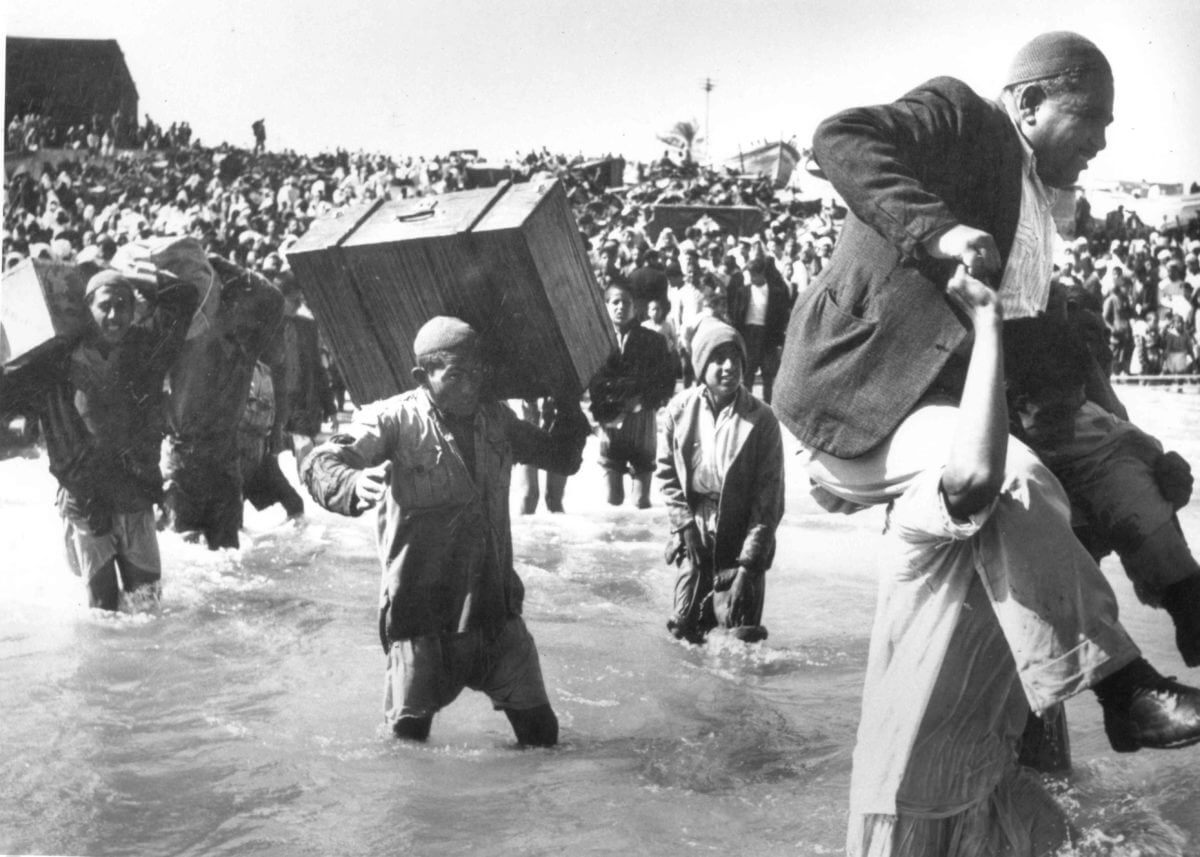
South Florida’s Jewish press has not published articles explaining Palestinian history to Jews who would actually be open to such information. Instead, we see accusations of antisemitism hurled at supporters of Palestinian human rights, an attempt to derail the message of justice for a people who have been denied their rights for far too long.

A new arms deal with Saudi Arabia shows that U.S. support for the regime hasn’t faltered.

Rashida Tlaib speaking out against Iron Dome funding reveals opposing Israel’s occupation is no longer taboo among elected American politicians.

Jewish Voice for Peace stages a religious protest at the home of Jeffrey Yass, the richest person in Pennsylvania. He supports expansion of illegal Israeli settlements in Palestine, and also supported Democrat Andrew Yang’s unsuccessful campaign for NY mayor.

Mondoweiss founder and senior editor Phil Weiss speaks to Khaled Elgindy about the first meeting between President Joe Biden and newly installed Israeli Prime Minister Naftali Bennett.
The Taliban defeat of the United States is a turning point in world history. Not only will the power of the American empire be weakened, but the War on Terror has also been politically defeated in within the United States. This is the beginning of the end of the American century.

We must not lose sight of what lies behind Israel’s unbridled use of force: American support.
Israeli provocation inside the Al-Aqsa mosque made the recent fighting in Gaza a war of choice for Israeli leaders. US approval also made it a war of American permission.