Walid Daqqah’s writings were fundamentally linked to a deep-seated worry about the future. While he mourns our collective Palestinian condition, Daqqa also reminds us that the future carries hope.


Walid Daqqah’s writings were fundamentally linked to a deep-seated worry about the future. While he mourns our collective Palestinian condition, Daqqa also reminds us that the future carries hope.
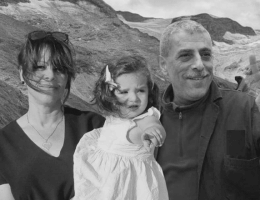
Walid Daqqah died in Israeli prison as a revolutionary and literary icon. But when he and his wife Sana’ gave life to their daughter through his smuggled sperm, Walid was given a second life.
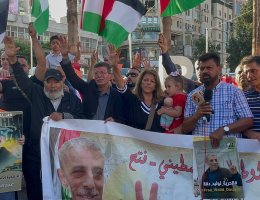
Walid Daqqah saw the “little prison” where he spent most of his life mirrored in the “big prison” that housed the rest of his people. His challenge to us and to himself was to free ourselves from the prison inside of us.

Tulkarem, Nablus, and Jenin have historically made up the “triangle of fire,” demarcating a geographic entity hostile to colonial rule. Today, the Tulkarem Brigade is fighting to preserve that legacy.
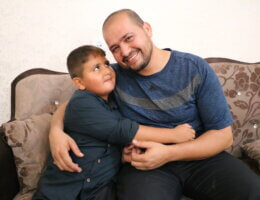
An entire generation of Palestinian children has been born through sperm smuggled by Palestinian prisoners behind bars. Israel refuses to recognize these children. In doing so, it criminalizes Palestinian life itself.
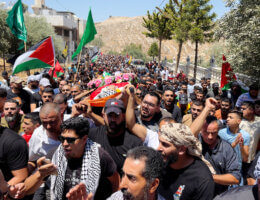
Palestinians continue to face a now-regularized tempo of Israeli attacks from settlers and the military, yet this has not done away with their capacity to resist.
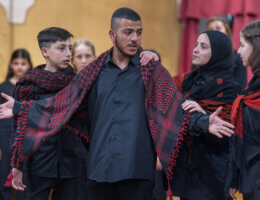
Palestine’s Amwaj Choir has embarked on an ambitious eight-stop tour of Italy, which includes performing the opera “Amal — Oltre il Muro” based on the work of imprisoned Palestinian writer Walid Daqqah.
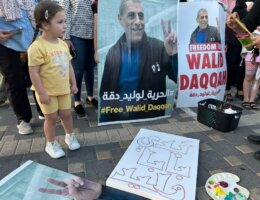
The Palestinian Youth Movement calls on the international community to demand the immediate release of Walid Daqqah and expose the illegal nature of his imprisonment.
Walid Daqqah broke free during his nearly four-decade imprisonment through his writings, his resistance, and the birth of his daughter, Milad. His lifetime of refusing the prison’s walls has brought us all closer to freedom.
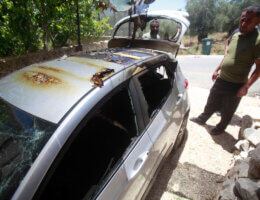
The Israeli settler movement and state both work toward the same goal: the colonization of Palestine, and the repression of resistance to that colonization by the native population.