As Israeli settler attacks on water sources multiply across the West Bank, Palestinian communities that have farmed the land for generations are being forced out. “If this continues, we will barely be allowed to drink,” a resident tells Mondoweiss.
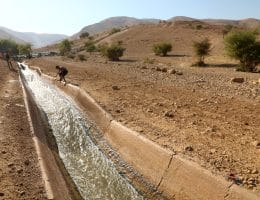

As Israeli settler attacks on water sources multiply across the West Bank, Palestinian communities that have farmed the land for generations are being forced out. “If this continues, we will barely be allowed to drink,” a resident tells Mondoweiss.
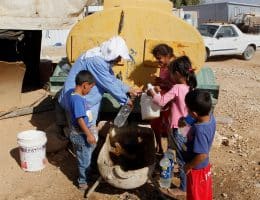
Palestinians in the West Bank are facing an unprecedented crisis in accessing enough water. But drying water resources isn’t the problem — it’s the fact that Israel extracts and controls all of the water from under their feet.
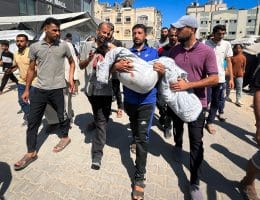
On Sunday, Israel bombed a water distribution point in the central Gaza Strip, as dozens of civilians, mostly women and children, waited in line for water. Twelve people were killed, eight of them children. It was not the first time.
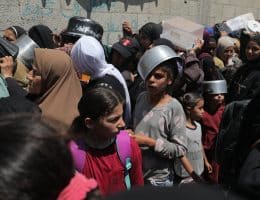
For many in Gaza, the psychological toll of seeing their children go hungry is far worse than the physical exhaustion they feel from malnutrition and scavenging for food.

Israel resumed its genocidal war on Gaza by cutting off water and electricity to 2.1 million Palestinians, threatening a humanitarian disaster.
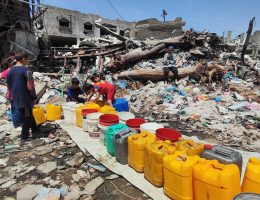
Human Rights Watch has issued a devastating report concluding Israel is committing the crimes of extermination and genocide in Gaza by focusing on one crucial issue: water.
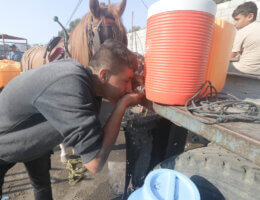
For Palestinians in Gaza, the most urgent daily task is the search for water. “Obtaining water has become like prospecting for gold,” explains H., a writer with We Are Not Numbers, “and whoever finds drinkable water is considered wealthy.”
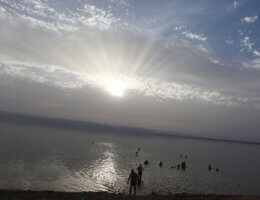
The biggest obstacle to saving the fragile ecosystems of the Jordan River and the Dead Sea is Israel.

Protests have continued in the Palestinian village of Beita against the establishment of a settler outpost on the village’s land. Israeli forces have continued to violently suppress protests, killing two more Palestinians over the past month. “For more than 100 days we have been resisting against the occupation and the settlers,” Abed al-Fattah Hamayel, a local activist in Beita, told Mondoweiss. “And everyday the situation is becoming even more volatile. The soldiers are just waiting for any excuse, or just the right moment to kill anyone.”
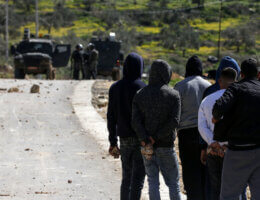
There is an ongoing, but hidden, Israeli war on the Palestinians which is rarely highlighted or even known. It is a water war, which has been in the making for decades. The recent protests in the West Bank village of Beita are the latest example, where Palestinians are demanding land rights, water rights and basic human rights.