A group of Republicans senators led by Arkansas’ Tom Cotton are urging the Trump administration to label West Bank goods as “Made in Israel.” A letter sent to Trump by the lawmakers was obtained by Axios. “This decision would support Israel and push back against anti-Semitism and the BDS movement,” it states.
“I would like to tell Pompeo, and all Americans, that when you drink that wine, you are drinking the blood of the Palestinian people,” Abdel Jawab Saleh, a Palestinian who owns land on this site of the Psagot settlement said.
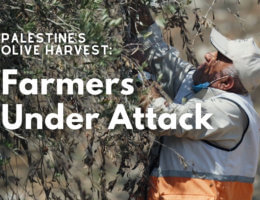
The Israeli settlers in the Nablus district are notoriously violent, and are routinely recorded as attacking Palestinians and their property year round. But once the olive harvest comes around every year, settlers typically focus their attacks onto Palestinian farmers and their olive trees.
For many Palestinians, the olive harvest isn’t just about picking olive it’s symbolic of their culture, their tradition, and the Palestinian ties to this land.
“If you’re looking for a key sign of what occupation is about, it’s what’s happening in the olive groves,” human rights monitor Ghassan Daghlas tells Mondoweiss.
Despite being been stuck living between COVID-19 and the Israeli occupation, Palestinians have come up with unique and creative solutions to the problems that they’ve faced because of the coronavirus. In this final episode of our COVID-19 series in Palestine, we’re showcasing Palestinians who responded to the coronavirus pandemic using innovation and creativity as a way to help their communities adapt to the crisis around them.
Being a foreigner in Palestine is complicated and Nora Lester Murad’s latest book collects essays from the men and women who found themselves living in Palestine, navigating both their privilege and the occupation.
Imagine being left to fend for yourself against the coronavirus, as your home is threatened by demolition, and your family is living under military occupation. That is the reality for Palestinians living in the village of al-Walaja. Watch the second episode in a five-part Mondoweiss series on how Palestinians are surviving under both a global pandemic, and the Israeli occupation.
When Neta Golan’s husband traveled to Egypt at the beginning of March for a wedding, she never imagined it would take nearly five months for him to make his way home. Her story is just one of thousands of families where Palestinians were stranded abroad.
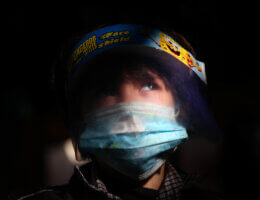
What would you do if you were living in a refugee camp during a global pandemic? For the first time in months, Palestinian refugee camps are seeing a spike in COVID-19 cases raising concerns over the potentially devastating effects the virus can have on disadvantaged communities like the Dheisheh refugee camp.