Allison Deger talks with Safwan Fayyad, a 30-year-old senior resident and internist at the Ramallah Medical Complex, about being on the front lines against the coronavirus in the West Bank. “Until now we are keeping pace with the patient load,” Fayyad says, “but if we face a serious outbreak where a majority of people would get sick that would be a disaster here.”
On April 8, eleven members of congress released a statement opposing the Israeli government’s potential annexation of the West Bank. The action comes amid reports that the country’s new coalition government will move forward with a unilateral annexation plan.
Palestinians have entered the third week of lockdown across the West Bank and Gaza as measures to slow the transmission of the coronavirus continue. With schools and businesses closed across the region, many families are choosing to self-isolate at home.
“This virus proves that we are all one, equally threatened by coronavirus. Israel needs to change. There is no security in Israel unless there is also security in Palestine,” Zoughbi AlZoughbi, Director of Wi’am: The Palestinian Conflict Transformation Center.
Mondoweiss correspondent Yumna Patel lives in Bethlehem, the epicenter of the coronavirus outbreak in Palestine. As the crisis continues to develop, Yumna paints a picture of what daily life looks like in the city, the emotions of the people, and her own personal thoughts and fears.
Last week, Palestinian officials took wide-ranging steps, declaring a month-long state of emergency, including closing schools and religious sites, and banning tourists. In the city of Bethlehem, the epicenter of the outbreak in the West Bank, Palestinian and Israeli officials began a lockdown on March 5, preventing entry and exit.
The Israeli army Thursday allowed dozens of Jewish settlers into Sebastia archeological site in the north of the occupied West Bank despite a Palestinian Authority decision closing tourist sites and banning gatherings in an effort to fight the coronavirus outbreak.
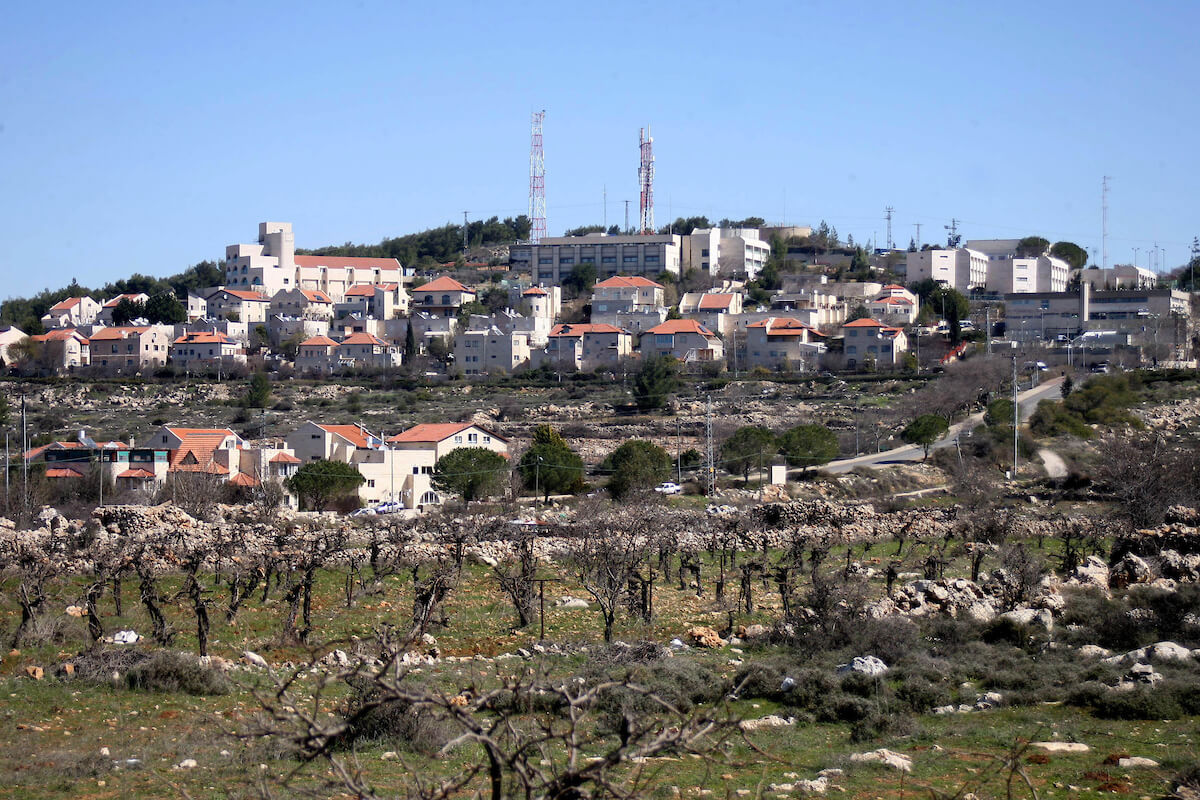
The village of Turmus Ayya, nestled in a valley between the Nablus and Ramallah districts in the northern occupied West Bank, had high hopes when a local Palestinian company proposed constructing a new housing development on the outskirts of the village. But the Netanyahu government wouldn’t allow it. “We learned from the media that Israel was banning construction in Area B, specifically in Turmus Ayya and the villages around the Shilo settlement,” Saeed Hussein, mayor of Turmus Ayya told Mondoweiss. “Since the release of the peace plan, any new policy in Israel can be directly tied to the American government,” Hussein said.
Nour Joudah writes, “the debate, the conversation, the driving force for peace and justice in Israel-Palestine cannot be about salvaging a territory of fragmented Bantustans, pieced together with a highway and tunnel.”