Archive

June 2018

Browsing

“The gruesome photos show a man desperately grasping at his throat for air as smoke pours from his cheek.” A searing report by the National on the disfigurement of Haitham Abu Sabla, whose head was penetrated by a tear gas canister fired by an Israeli sniper on the Gaza border June 8, leaving him severely compromised.

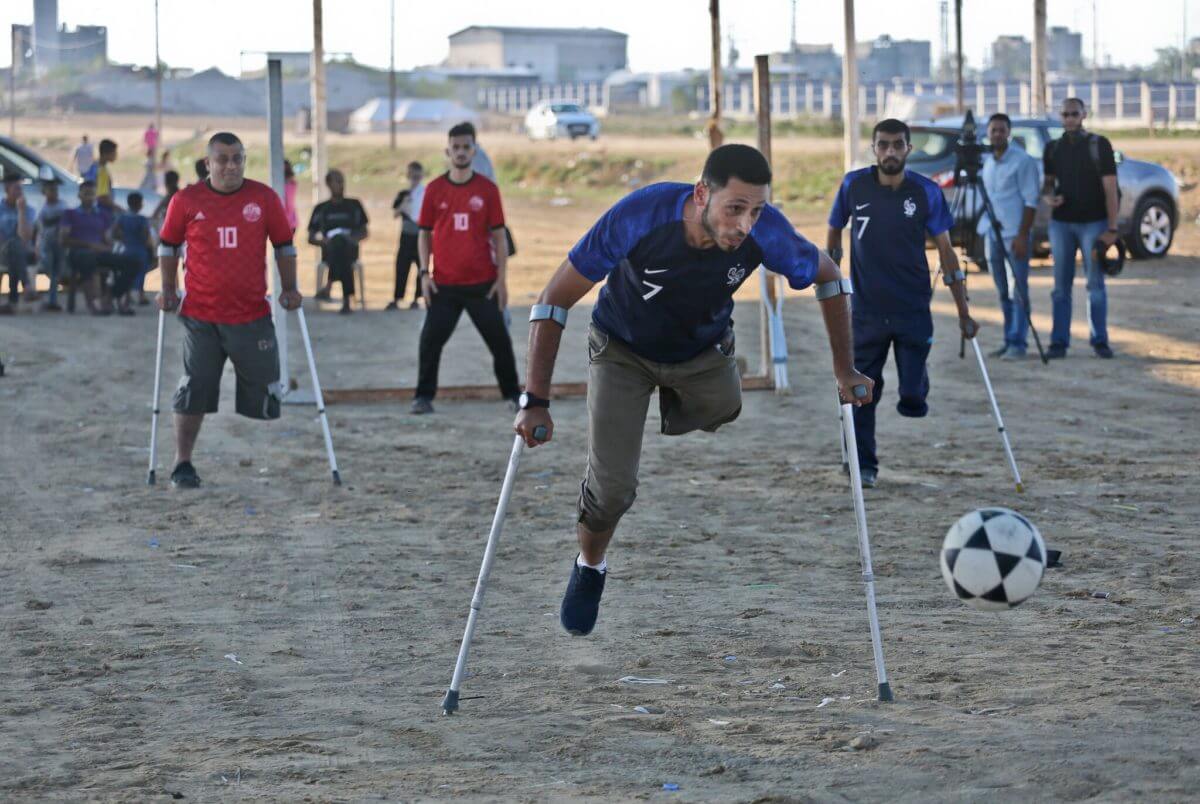
Dramatizing the blockade of Gaza, 14 Gazan soccer players who have lost a leg to Israeli fire played a match simulating France and Australia’s game in the World Cup in Russia tomorrow. The players sometimes used their crutches to kick the ball. Two goals were scored.

A review of the Netflix series “Fauda” by Ahmad Saad: “The show creators actually served in the secretive killing unit, which provides both gravity and a degree of perverted-ness to the show. The calls for sympathy for Israeli soldiers suffering from PTSD at having to torture Palestinians is rendered moot when their best form of therapy is to create a television show that mimics that reality.”

In an article criticizing the intersectional left at the Forward, Batya Ungar-Sargon continuously reinforces the false and dangerous notion that to oppose Zionism is to be against Jews: “Jews feel that when they do show up, there’s always something wrong with them.” Zionism is an ideology, Donna Nevel asserts; and even if Jews adhere to it, it is not “anti-Jewish” to oppose it.

David Halbfinger (Photo: New York Times)

To determine whether demonstrations in Gaza are “peaceful protests or violent riots,” New York Times reporter David Halbfinger imbedded himself with Israeli forces. The one-sided report follows a pattern, Norman Finkelstein says, in which Times writers rely on official Israeli statements to portray the encounters at the fence as armed confrontations in which Israeli snipers return the fire of protesters.

A small army of pro-Israeli watchdog organizations keeps a close eye on everything Palestinian academics do and say, every Tweet they post and group they join, ready to call these scholars out for alleged anti-Semitism. The groups include Hillel Int’l, which works with the Israeli ministry of education. Though critics of Israel are at last losing their fear of this army.

Given their own history, the Irish understand the implications of Israeli settler colonialism and Palestinians appreciate Irish people’s support. Despite collaboration between Israel and Ireland, Irish universities have been hospitable to pro-Palestinian voices. And an independent Irish senator is planning to introduce a bill seeking to prohibit the import and sale of goods originating in illegal settlements in occupied territories.