Ronen Bergman’s pageturner on the history of Israeli assassinations, Rise and Kill First, revels in the jokes the killers make about their targets. “That man died of natural causes by swallowing a pillow.” “No dog, no rabies.” “Someone who deserves his ticket on the train to elimination.” The language is morally degrading and serves to justify killing Arabs, who are voiceless in the book.
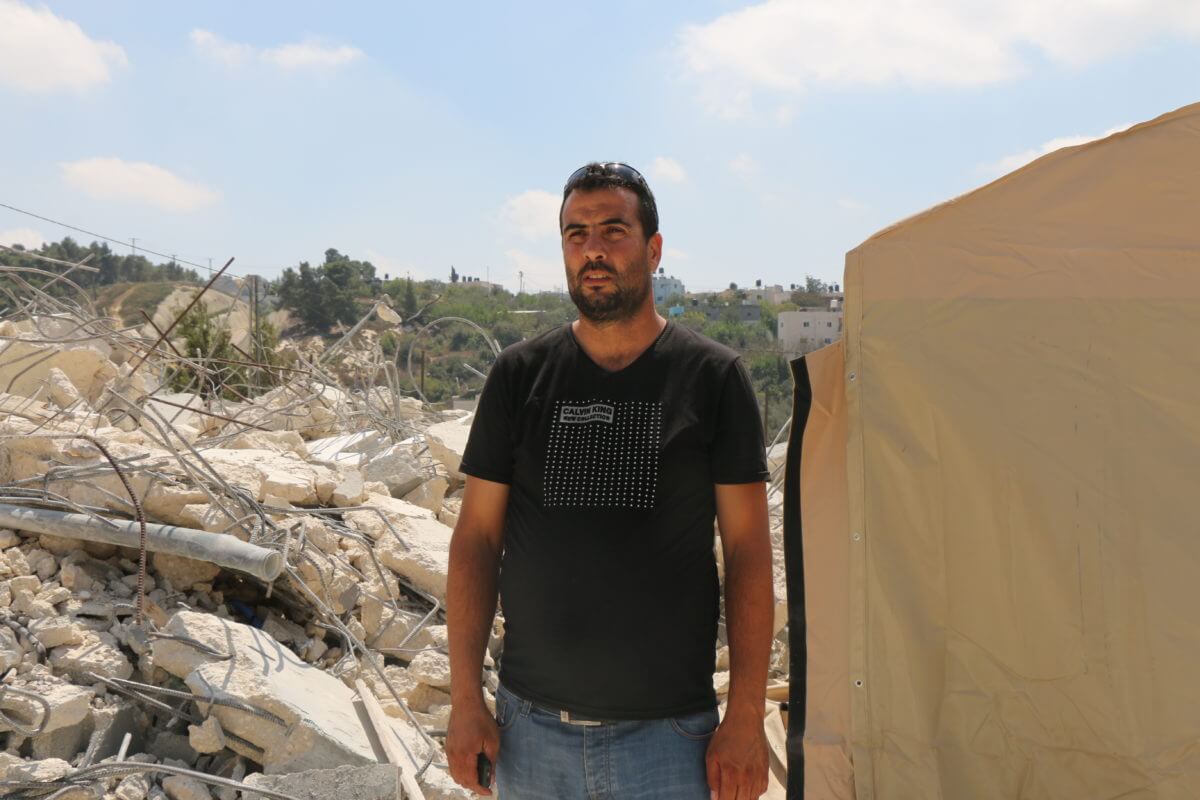
In the middle of the night, as bulldozers and armed Israeli soldiers surrounded his home, Khaled Abu Kheyara, 32, woke up his three young children and told them their home was being destroyed. “It was around 3:30am when the soldiers arrived to our home,” Abu Kheyara told Mondoweiss as he sat among all his family’s belongings in his new home — a small tent made of metal rods and tarp. “We barely had any time to take out all of our belongings before they started demolishing the house,” he said. Abu Kheyara’s home, which he shared with his brother and his family, was the first of four buildings that Israeli forces destroyed on Monday morning in the Bethlehem-area village of al-Walaja, in the southern occupied West Bank.
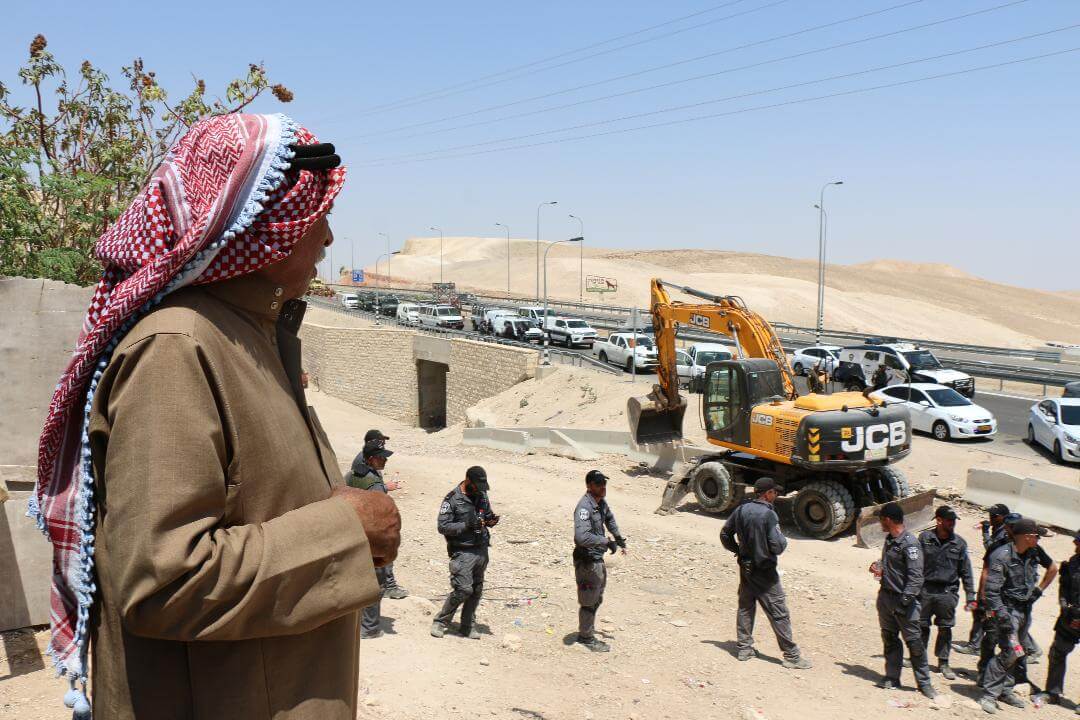
After a long and courageous struggle, the people of Khan Al-Ahmar lost their battle when the Israeli high declared the demolition of their village can go ahead. Jamal Jaheleen, a Palestinian writer and poet who lives in the village of Khan Al-Ahmar, writes, “It is expected, that after many court sessions, after the people of Khan Al-Ahmar refuse all offers from the occupying forces, and insist on their right to remain and defend their village, the bulldozers will come to crush the lingering dream of survival, of preserving the heritage and the very fabric of their identity.”
Given recent history, it is surprising Israel has not invaded Gaza again. Previous massive Israeli ground attacks, in 2008, 2012 and 2014, required fewer pretexts than we see today with the success of the Great March of Return. But Israel’s ground forces stay put. Two respected analysts of Israel’s military explain why: the Hamas resistance movement has prepared strong defenses inside Gaza that have raised the costs of an invasion above an acceptable level.
The New York Times says that Jeremy Corbyn brought the “anti-Semitism crisis” on himself by fixating on Israel and says not a word about Palestinian human rights, thereby demonstrating a law of western politics: The instant Palestinians start getting support from someone who might have real power, the anti-Semite accusation is wheeled out, everyone remembers Who The Real Victims Are, and Palestinians are shoved under the bus.
Everything that Trump is doing in Israel/Palestine, from moving the embassy to telling Palestinians to accept Jordanian sovereignty, is in line with the agenda of his biggest backer, billionaire Sheldon Adelson, who thinks Palestinians don’t exist and they should never have a state. The pattern is clear. But the press ignores the story.
In an interview with a right-wing Israeli newspaper, Elor Azaria, said he had “no remorse whatsoever” for killing an incapacitated Palestinian in the occupied West Bank city of Hebron in 2016. One might say that Azaria is simply a bad apple and does not reflect the behavior or attitudes of Israeli occupying soldiers. The problem is, there are many documented videos of Israeli forces behaving in such a callous way, with overwhelming support from the Israeli public.
Lana Del Rey is one of many artists who recently canceled their performance at the upcoming Meteor Festival in Israel. Natasha Rappezzo writes, “If Lana Del Rey chose to perform at the Meteor Festival, she would have been using her name and influence to whitewash Israeli crimes. As a fan, I am happy that one of my favorite artists has grown and will stand on the side of justice. As a supporter of Palestinian human rights and freedom, it has been incredible to watch Palestinians and the international community rise to action and deliver this win for the movement.”
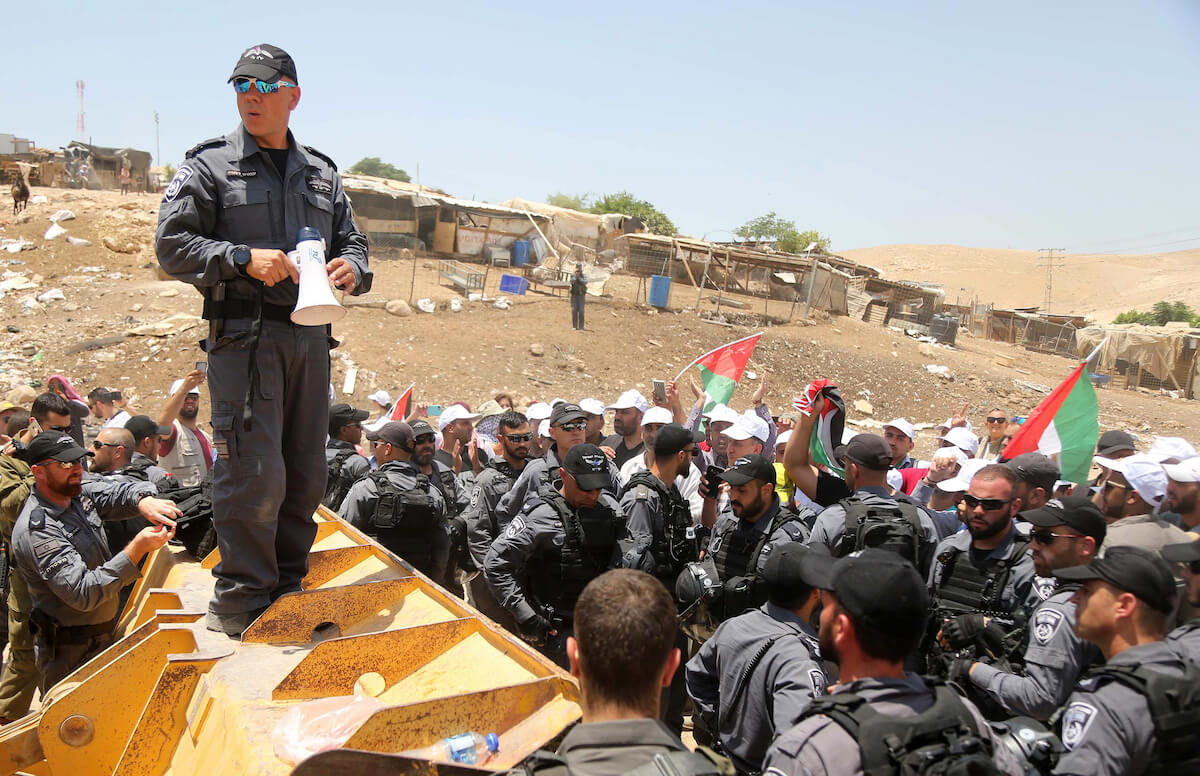
The Israeli High Court rejected on Wednesday petitions filed by the Bedouins of Khan al-Ahmar against the demolition of the village, paving the way for Israel to demolish the entire community any time after September 12. The decision was the final greenlight for the government to forcibly evacuate and destroy Khan al-Ahmar, a project that it has been pursuing for years in order to create a bloc of illegal Israeli settlements in the area.
Donna Nevel and Alan Levine draw upon the theme of tashlich — a Jewish new year ritual in which Jews throw crumbs or pebbles into moving water to symbolically cast away transgressions — to urge our communities to reflect upon what keeps us from being full-hearted partners to the Palestinian movement for justice.