

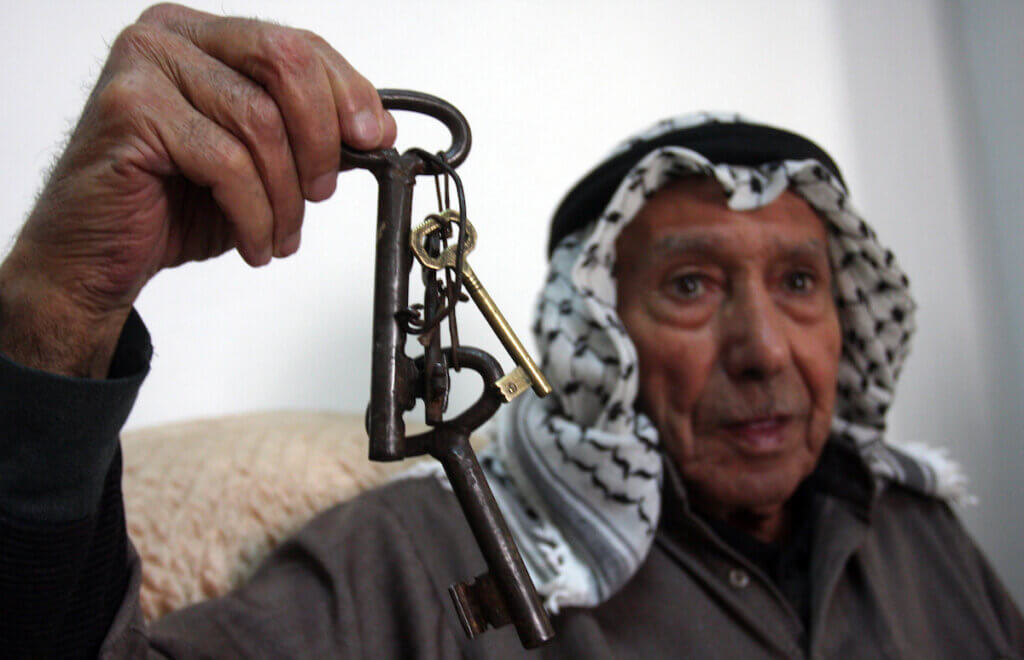
On the 10th of May 1948, began the exodus from Safad. By the 11th, estimates state that up to 15,000 Palestinians were forced out, and the city came fully under the power of the Jewish paramilitary forces. Safad, is the highest city in the Galilee. I’d never heard of it or its significance until I met the people that were expelled from it.
There is a subway that runs beneath the Mezza highway, linking the University of Damascus on one side to the student accommodation on the other. In that subway there are an array of small retail spaces. Some are stocked for the medical students, selling anything from stethoscopes to medical dictionaries. Those catering to the literature department, those just selling cheap stationary from China. But our favorite was the snack stall. It was our daily routine, me and Nisreen. Lunch and pickle toasted sandwiches, and a packet of Lamis chocolate biscuits washed down with Karm strawberry milkshake. Walking down along the rush of the highway with our backpacks entangled in wind disheveled hair. Chatting, laughing, eating absolute shit that for teenage palates tasted of the bliss of a blossoming friendship.
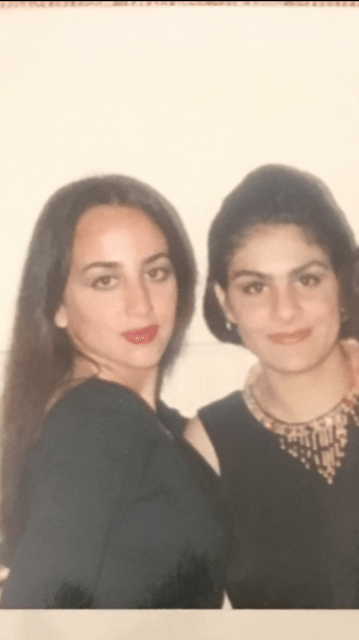
I was 16 and she was 17, enrolled into the faculty of Arts, when really we should have still been in high school. Me fresh off the boat from London and Nisreen from the Old Zahira. A district that sits on the edge of Al- Yarmouk Refugee camp. The camp initially established in 1957 to house the influx of Palestinian refugees, which has since morphed into a 2.11 km2 concrete district of Damascus. I was very quiet, and just didn’t know how to fit into the Damascene clique. I dressed in oversized dungarees, tie dye and DMs and still had a stash of Benson & Hedges (the favored cigarettes of the 90s teenager). Nisreen was the only one of the group down to earth enough to not turn her nose up at my awkwardness. She loved to laugh at my broken Arabic and coo over the British accent, and she took me under her Palestinian wing. It wasn’t long before I was invited to her neck of the woods. Me coming over from the affluent Maysat to the Palestinian side of struggle to get by. A two bedroom flat in a working class district of the city. A flat brimming with the warmth of Palestinian hospitality. Home to her parents, her three sisters, her younger brother, and an old Christian lady (they called aunty) that had been raised in an orphanage and had along the road of life somehow found herself destitute and taken in by the family. Despite the lack of room they always found a space for me. ‘Stay over Farrah, our house is your house!’ All squeezing in tight, Nisreen, her sisters, me, and her aunty all in one room, laughing into the early hours. I learnt the best of Arab swear words from aunty as I would try and mimic the Palestinian accent to roars of laughter!
Or those nights on the kitchen balcony, watching the rush of life go by under clear Syrian studded skies. And always in his designated corner of the kitchen, Abu Khaldoon. Her father, was a first generation Palestinian refugee. His five-year-old feet forced from Safad, feet that walked all the way to Jordan. Where they went from one camp to the next, from mosque to church, each night sleeping wherever there was a place at the inn. They left their city with the clothes on their backs and the keys to their house. Parents, grandparents, uncles, aunts, siblings, cousins, friends, the entire population in the space of one day. Gone. They remained in Jordan until UNRWA began to register the people and subsequently ‘distributing’ them amongst the neighboring Arab countries. From Jordan they were sent to Aleppo, and finally the last stop was the outskirts of Damascus. This proud hard working man bent over deep in his work over a small improvised workstation. I was fascinated. He was a civil servant by day, working at one of the ministries beneath the mountains of archaic bureaucracy that colonialism so thoughtfully left behind for us. His salary an insult and hence his working day merged with the night. Along the way he had trained to be a dental technician. Yet there were no white coats or fancy labs, just his box of tools, a lamp clamped to the side of the table and his hands. Making the dentures and braces of the affluent smiles across on the other side of the city. Nisreen had proudly told me how he worked for all the top dentists in Abu Rummaneh, how he was so in demand for his tidy work. We would often perch on the kitchen counter watching him toil, almost always into the early hours of the morning. He had a way with his hands, a skill for making things, deep in concentration yet always smiling and willing to chat to us. Nisreen said that her grandfather in Safad had been a skafi by trade. I didn’t know what that meant, and she said he was a shoe maker. This was certainly no cobbler’s workshop in the hilltops of the Galilee, but a quiet corner in Damascus, where a man was trying to make ends meet. No history lessons ever taught me this back in London.
Nor the significance of the huge bronze keys that I would often see in Palestinian households. Keys passed from one generation to the next along with the deeds. The key of return, the right to return. The false promises of the UN and the Arab leaders. Most Arab governments had abstained from giving full citizenship to Palestinians, always dangling the carrot of return, you will return blah blah blah. The Arab rhetoric had always been louder than its capability, and fronted by the vastly popular and charismatic Gamal Abdel Nasser, and his push towards pan-Arabism. In reality the subsequent six day Arab-Israel war of 1967 was a catastrophe that brought nothing but abject humiliation and destruction of military power and led to Israel occupying the Gaza Strip, the Sinai Peninsula, the West Bank – which includes East Jerusalem and the Golan Heights.
The key, a constant reminder of what had been stolen, hanging on the wall. ‘What is that key amo?’ No history lesson ever taught me this.
The key, a constant reminder of what had been stolen, hanging on the wall. ‘What is that key amo?’ No history lesson ever taught me this.
Abu Khaldoon and his immense pride, his determination to support his family. The way he would go without so that his children would want for nothing. How he lived through coronary heart disease without any medication and subsequently died of it a year later as he would rather the money be left for his children than pay for the operation that was advised. How he knew that he was dying and that every so often he would buy some gold and give it to his wife for future provisions. How he took to taking more and more work from the dentists that more than likely paid him next to nothing in return.
I remember Nisreen calling me to tell me he had died. I remember putting on my black clothes and white scarf and making my way through the city over to her side. Seeing the men stood tall in their keffiyehs, their sense of pride and resilience never shaken. The kitchen being a hive of activity that day, coffee, more coffee. The tradition of serving the mourners’ bitter coffee. Abu Khaldoon’s little workstation standing solitary to the side, tools abandoned. The key still hanging on the wall, waiting to be passed on to the next generation.

Most of his children, including Nisreen, are now in Sweden. Forced out due the Syrian civil war, during which the Al Yarmouk Camp was the scene of intense fighting and subsequent sieges. Abu Khaldoon walked to Damascus, and Nisreen to Gothenburg. The key to the house in Safad, still no closer to its door. I see the posts of her brother on Facebook, tormented, as he lives miles and miles away from the land of his ancestors, beneath a dull Gothenburg sky, longing for the heights of the Galilee. Wondering who lives in his grandfather’s house, wondering who took up the tools in the workshop, who made claim to the door that’s key is treasured by its rightful owner.
On the 20th of May 2021, and according to the most recent figures of the Israel Central Bureau of Statistics, the city of Safad is predominantly Jewish and non-Arab, with no significant Arab population.
On the 20th of May 2021, when this was written, there was an ongoing military campaign against the Gaza Strip. There is an ongoing agenda of ethnic cleansing from the Sheikh Jarrah neighborhood in East Jerusalem. There is an ongoing system of Apartheid designed specifically to push more and more Palestinians out of their rightful homes and ancestral lands, and to populate them with settlers. More injustice, more people on the roads of exodus carrying yet more keys. The apathy I read, see and hear around me is baffling, but maybe if they had sat in that kitchen with Abu Khaldoon and heard him retell his journey I would like to think that even the most indifferent of hearts would have been stirred.
Most Jews don’t know this, but Jews who were exiled from Spain in 1492 took their keys with them. Some families still have them. A few years ago, Spain said that any family that still had their keys could return. Eight families did. And Jews think Palestinians will just forget!!!
MUST LISTEN!!!
From Canada:
https://www.cbc.ca/radio/sunday/the-sunday-magazine-for-may-23-2021-1.6035728
“What next for Palestinians and Israelis post-ceasefire?”
From Canada’s CBC radio, the Sunday Magazine, May 23/21, a most informative discussion regarding the Palestinian/Israel conflict featuring Paul Rogers, eminent Professor Emeritus at Bradford University, Northern England.
jon s is he the guy who used to unlock the door you now enter through .are those the same keys or did you change the locks.
Have you ever seen him across the street looking sadly at his former home.Did he ever find the courage to knock on the door and ask to just glance in.Did you chase him off.