

Staring at a blank white paper for over an hour before we actually start typing – this is a feeling we all know well as journalists in Gaza. My colleagues and I experience it all the time. We have a duty as journalists to push back the depressing nature of the stories we hear so that we can share them with the world.
Reporting from Palestine forces journalists to be on the front line but without weapons to defend ourselves. We have no intention to engage in any fight or to position ourselves in a conflict – but sometimes, just being a journalist and telling stories is reason enough for us to become targets.
In any war in Gaza, anyone who moves in the streets could put his life at risk and become a target of the Israeli drones and air forces flying above. Just like the civil defense forces, the emergency medic, and the rescue teams, journalists are always on the move, doing their jobs for the sake of the people around them. In spite of the risks, we do our jobs and cover stories, even in the middle of war. This is the reality of journalists in Gaza.
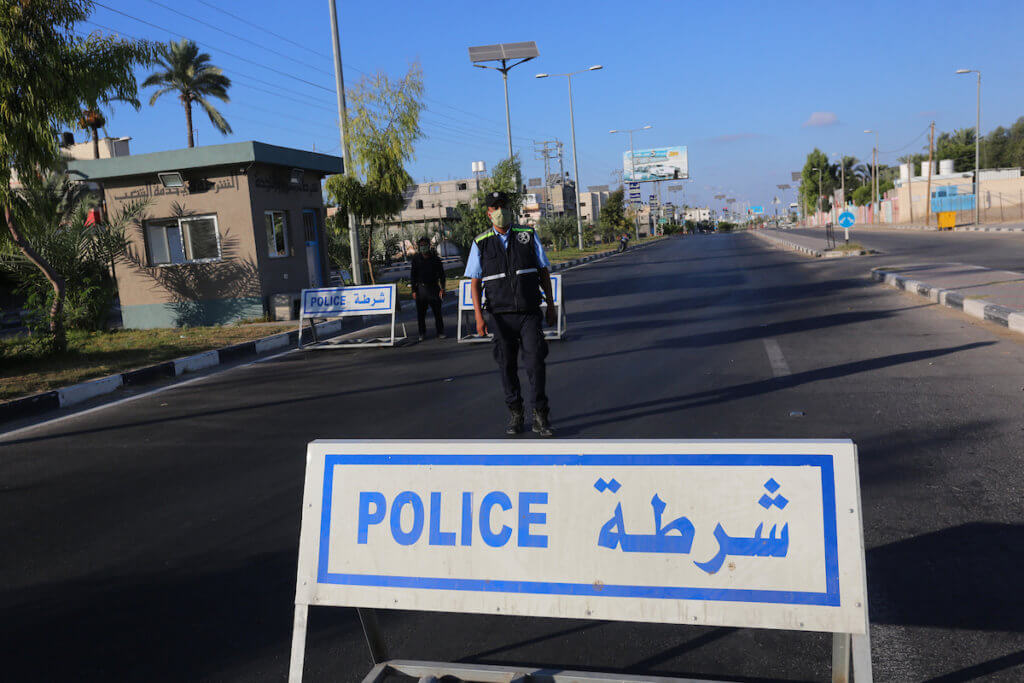
I felt inclined to tell this story after meeting my friend, Hani Abu Rizeq, a journalist at the Al-Hayyah national newspaper after he spent two days in prison under the custody of Gaza police. He told me during our chat while we both walked on Al-Rimal Street on a Ramadan afternoon that he had just lived through the worst two days of his life. For someone in Gaza, who has experienced several wars, that is a very strong statement to make.
As we walked down the street, people stopped to greet Hani on every corner and to express their support after his release. Hani is a social media blogger known to many people in Gaza City. Hani was stopped and detained by a traffic cop after the officer demanded an authorized government letter from Hani in order to film in Al-Sarayah Square, one of the most popular public spaces in Gaza City.
Hani says that as a journalist, he knows that it’s his right to film and make videos in public places in Gaza. But even though he knows his rights, Hani could not convince the traffic police officer that day.
“He asked for permission, but when I failed to convince him, he attempted to take my bag, which contained my laptop,” Hani told me. “I pulled the bag away from him, and that’s when he called police reinforcements. In a couple of minutes, I found myself in the police car, and the officer smacked me on my face three times,” Hani said.
It was Hani’s first time being imprisoned. He was feeling indescribable injustice and fear. When we walked down the street, he was trying to avoid passing any place where the police were standing.
“It’s humiliating to go to prison and to be treated in such a way only because you’re a journalist and doing your work,” he said.
Hani is not the first nor the last journalist in Palestine who faces struggles to do his job. We spend years studying journalistic ethics and integrity, but our rights are constantly being violated.
We learn with hope about the power we can have as journalists, but many of us are surprised to find the reality is that when we start practicing journalism, many of us do not have the right to freedom of expression.
I know colleagues in Gaza who were fired from a well-known U.S. newspaper only because they shared some lines from the Holy Quran on social media. Or because they supported Palestine. They were called antisemitic.
It’s not only inside Gaza that journalists face obstacles to doing their work. As Palestinian journalists, we face challenges locally and on the international stage from people who question our integrity as journalists simply because we are Palestinian. Everywhere we go, there are limitations placed on us.
Behind the stories that we tell of oppression, my colleagues and I have dozens more stories and experiences of our own.
Palestinians need their Gideon Levy’s to get to a better future.