

On Monday, U.S. President Donald Trump said that he was “highly unlikely” to extend the ceasefire with Iran that was set to expire on Wednesday.
As soon as he said that it was clear that he was going to soon extend the deadline. Indeed, he did so on Tuesday, but it was the way he did it that was particularly telling.
In a post on his Truth Social site that was clearly not written by the president, we read:
“Based on the fact that the Government of Iran is seriously fractured, not unexpectedly so and, upon the request of Field Marshal Asim Munir, and Prime Minister Shehbaz Sharif, of Pakistan, we have been asked to hold our Attack on the Country of Iran until such time as their leaders and representatives can come up with a unified proposal. I have therefore directed our Military to continue the Blockade and, in all other respects, remain ready and able, and will therefore extend the Ceasefire until such time as their proposal is submitted, and discussions are concluded, one way or the other. President DONALD J. TRUMP”
First, there is no evidence that Trump’s claim that the Iranian government is “seriously fractured” is true. But it’s really just an excuse for extending a ceasefire that serves Trump’s purposes, and because Iran has refused to negotiate a permanent deal as long as the United States maintains its blockade of Iranian ports in the Strait of Hormuz and targets Iranian commercial oil vessels.
In reality, Trump didn’t just extend the ceasefire, he erased the deadline. The ceasefire is now completely open-ended. On one hand, that means it can evaporate at any moment. But on the other hand, it means that the current standoff could go on for a very long time.
It is a highly unstable situation, so the best way to consider it is to look at it from each party’s point of view.
United States
This is an unusually good tactical decision by the Trump administration. As long as the current situation holds, Trump has extricated himself from a hopeless war, where every day was a new failure. True, the American position is considerably worse than it was on February 27, before this war was launched, but it is no longer continuing to decline.
Trump has been looking for an exit ramp from this war for weeks. This isn’t exactly it, but it opens the door to options and relieves some of the pressure on him. Iran is no longer attacking the Gulf Arab states; that’s important not only in the short term, but because the longer the war rages, the more lasting the damage to oil production will be. It has already devastated Qatar’s liquefied natural gas production for years to come.
More broadly, it gets Trump out of the cycle of escalation. All he has left in terms of military action is more devastation of Iranian infrastructure, which will mean far more devastation of the lands of the U.S.’ Gulf allies. The only other option is a ground assault, which is so bad an idea that even he has done all he can to avoid it. The ceasefire puts a stop to that.
While it doesn’t reverse the spike in prices, it does mitigate their growth for the time being. In other words, the ceasefire has temporarily stopped the bleeding, but Trump has not yet figured out how to treat the wound. Still, that’s a clear improvement over making it worse.
Iran
Iran is obviously served by the ceasefire in that its people and infrastructure are not being bombed. But it does little else for them.
One reason this open-ended ceasefire is a tactical success for the United States is that it yields the gains discussed above without giving Iran anything it wants.
Iran may hold the keys to the Strait of Hormuz, and can therefore keep the global economy hostage, but it gains nothing with the Strait without a permanent deal.
Iran is smart not to agree to talks if the United States maintains its blockade of Iranian ports, and was justified in expecting that if it permitted traffic through the Strait, that meant Iran was included as well.
But controlling the Strait is useful for Iran mainly as a tool to get what it needs: sanctions relief and re-entry to the huge Asian and European markets that have been closed to it for more than a decade. That is how Iran rebuilds its economy—not by charging tolls to pass through the Strait—something that is impossible at the moment, anyway.
That reality also makes the ceasefire less attractive to Iran than it might be. The respite from bombs is positive, but they need to continue to apply pressure for a deal to end the overall war. That’s why they weren’t particularly interested in a ceasefire to begin with.
Iran needs serious negotiations, and that’s problematic when dealing with the United States under a relatively normal president. With this one, it’s even more difficult.
Yet Iran knows by now who it’s dealing with. They need to stand firm, but they also know they can ease a lot of the pressure on Trump, regardless of what he says in public. They must balance that approach carefully.
Part of that will be not allowing this ceasefire to go on indefinitely. It is fair for Tehran to believe that Trump will eventually grow impatient and end the ceasefire himself. But they will have to be mindful of the fact that, given how badly the war has gone for him, he might be reluctant to restart it. A prolonged ceasefire with no economic relief for a blockaded Iran is not a battle Tehran can win, for all their strategic thinking and resoluteness.
Israel
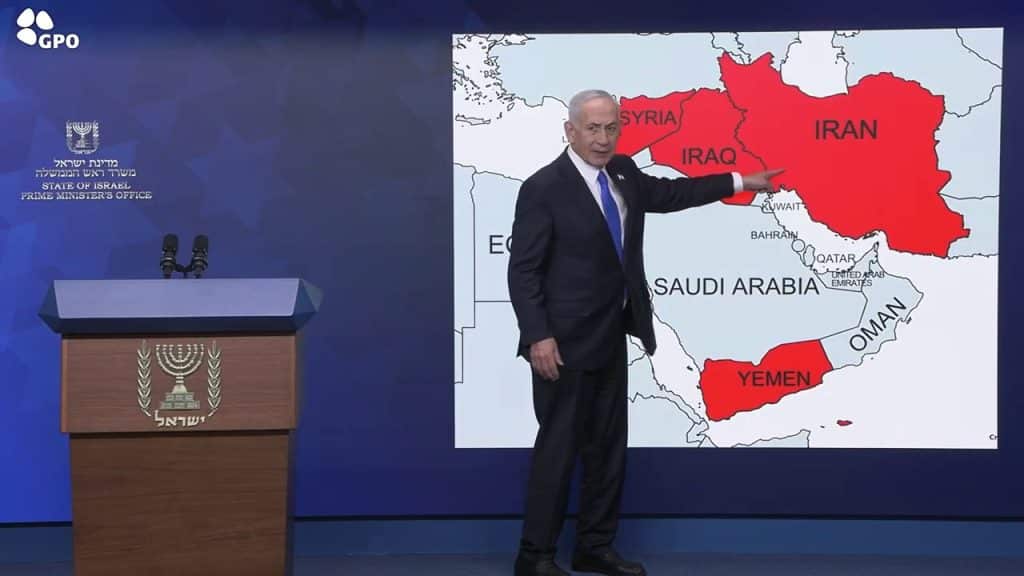
Israeli Prime Minister Benjamin Netanyahu has gone to great lengths to separate the war with Iran from the war he has been waging on the people of Lebanon. And he’s been successful in doing so.
Netanyahu has the assistance of Lebanese President Joseph Aoun in that endeavor. Aoun has broken with long-standing Lebanese practice by engaging in direct talks with Israel and has spoken about transforming the ceasefire into a permanent agreement.
That is likely impossible. Israel’s goal is a quiescent Lebanon that is essentially a vassal state it controls. That is obviously not something that can be achieved by anything but overwhelming force.
The talks between Israel and Lebanon are a show. When we hear Lebanese leaders talk about deploying the army in the south, it is wishful thinking. Israel wouldn’t be satisfied with that unless Hezbollah had been eliminated. The Lebanese military is neither capable nor willing to do that. Any attempt to forcibly disarm Hezbollah carries a major threat of civil war, a prospect Israel has no concerns about, but the Lebanese government surely does.
Aoun is playing this game because he has no other hope of getting Israel to withdraw from Lebanese territory. Israel is playing it to appease Trump, but also to separate the war with Iran from the one in Lebanon.
It has to be clear to Netanyahu by now that Trump is not going to commit the kind of American forces, particularly ground troops, for his aims in Iran to be realized. Regime change is off the table, that’s why Trump keeps insisting it happened.
But the long-held Israeli desire to expand its border northward toward the Litani River and exercise control of a decapitated Lebanon is still within reach for the Israeli prime minister. The Iran war may have given him the opportunity to chase that dream, but to make it happen, he must now get the world to see them not as two fronts in the same war, but as separate wars.
Basically, Israel is going to try to treat Lebanon as its consolation prize. It is difficult indeed to see Trump continuing to exercise the kind of pressure that would be necessary to hold Israel in check permanently.
The likely next steps
For now, the ceasefires in both places are holding, but they are tenuous.
Israel will do all it can to reignite the hot war against Iran and to renew its offensive in Lebanon. Both wars are still supported by a clear majority of the Jewish public and overwhelmingly by the government, including most of the opposition parties.
Between the U.S. and Iran, the question is which collapses first: Iran’s ability to withstand a blockade that is starving it or Trump’s ability to endure a global energy crisis.
Between the U.S. and Iran, the question is which collapses first: Iran’s ability to withstand a blockade that is starving it or Trump’s ability to endure a global energy crisis. The relative pressure might suggest that Iran would break first, but Trump’s erratic nature and notorious impatience make it more likely that he will be the one to blink.
Then the choice is between a return to even more intense hostilities and a short-term agreement that can satisfy all parties while a long-term settlement is worked out. That is what Iran wants, but it doesn’t hold a lot of appeal for the United States and is an absolutely revolting idea for Israel.
If there were a rational government in Washington, it would recognize the unique opportunity it has to strike a reasonable deal with Iran, bring it back into the community of nations, and broker better relations between it and the Gulf Arab states. That was the vision of the Iran nuclear deal at its best.
But American governments are not rational; they are hubristic and, in general, driven more by greed, power, and ideology. In the current case, it is driven additionally by ignorance and narcissism.
The pressures on the global economy from this ceasefire will bring the violence back if no sensible agreement is reached. And sense seems in short supply.
“American governments are not rational; they are hubristic and, in general, driven more by greed, power, and ideology.”
Yes, let’s not forget that this didn’t start with Trump.
I remember someone, I forget who, saying that the Iranian government’s aims were: Death to America, which they cannot do; Death to Israel, which they cannot do; and Keep the women veiled, which they can do, so that’s what they do.
Iran’s government is horrible to its own people, but no threat to America. It is a threat to Israel’s position as sole regional hegemon, not to Israel’s existence. Let’s not forget that Israel has nuclear weapons.
What to expect next? Israel will violate the ceasefire. And the “most moral army in the world” will continue what it does best:
Killing a journalist (Amal Khalil), while preventing medics to reach herhttps://en.wikipedia.org/wiki/Amal_Khalil
IDF probes video showing soldiers destroying solar panels in Christian-Lebanese villagehttps://www.jpost.com/middle-east/article-894118
Israeli Soldiers Testify to Widespread Looting in Lebanon: ‘Commanders Know and Do Nothing’https://www.haaretz.com/israel-news/israel-security/2026-04-23/ty-article/.premium/israeli-soldiers-testify-to-looting-in-lebanon-commanders-know-and-do-nothing/0000019d-b999-d2d7-af9f-bbb986480000
And destroy civilian infrastructure like it did since 1948 to prevent its ethincally cleamsed owners to have something to return to.
At least a few of them still are able to feel, what they truly are.
‘I Felt I Was a Monster’: IDF Soldiers Talk About the ‘Moral Injury’ – and the Silencehttps://www.haaretz.com/israel-news/israel-security/2026-04-17/ty-article-magazine/.premium/when-i-returned-from-gaza-they-called-me-a-hero-but-i-felt-i-was-a-monster/0000019d-966d-de40-ad9f-966d73860000
It turns out that destroyng hospitals and murdering medics seems to be not unique in Gaze, but an Israeli genocide doctrine, making an area uninhabitable.
https://youtu.be/hY25JlG7EY8?t=1969