

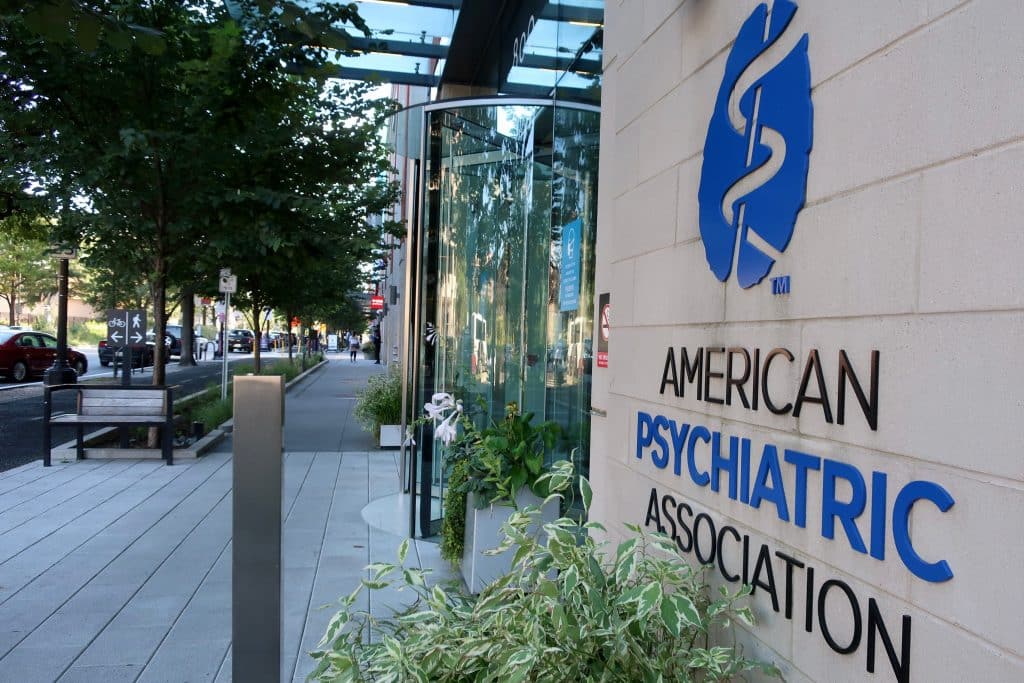
When the American Psychiatric Association invited me to deliver the Chester Pierce Human Rights Lecture at its annual meeting this month, I believed the organization was affirming a foundational principle of medicine and psychiatry: that human suffering deserves recognition regardless of politics, nationality, religion, or ideology. The lecture was intended to examine the psychological consequences of mass violence, especially for children and civilians trapped within conditions of war and collective trauma in Gaza.
Hours before it was scheduled to begin, the lecture was suddenly canceled. I do not believe this was a simple or easy decision for the organization. Although, I was not given any clear reason for cancellation, I was informed that in the days leading up to the lecture, organized outside email campaigns and pressure from advocacy groups intensified against the event, with accusations that discussion of Gaza through the framework of genocide studies or Holocaust scholarship was inherently antisemitic or unsafe.
At the same time, many leaders within the APA worked in good faith to support the lecture and defend the importance of open humanitarian discussion. Several Jewish colleagues and mentors publicly and privately expressed solidarity, defended academic freedom, and emphasized that concern for Palestinian civilians is fully compatible with opposition to antisemitism. The stated reason was concern over “safety” and controversy surrounding the topic of genocide. Yet the irony is difficult to ignore. The lecture itself centered on Holocaust scholarship, genocide studies, and psychiatry’s ethical responsibility to confront dehumanization, hatred, and collective violence. It explicitly condemned antisemitism, Islamophobia, racism, and all forms of extremist ideology.
The lecture was named in honor of Dr. Chester Pierce, the pioneering Black psychiatrist who introduced the concept of “microaggressions” and devoted his career to studying the psychological consequences of racism, exclusion, and structural violence. To speak in his name while avoiding difficult moral questions would have betrayed the very spirit of his legacy.
My presentation drew heavily from the work of psychiatrist Dr. Robert Jay Lifton, whose research on Nazi doctors explored how ordinary professionals become psychologically adapted to systems of cruelty through moral disengagement, obedience to authority, fear, propaganda, and ideological conditioning. Holocaust scholarship is not valuable because it belongs only to history; it remains essential because it helps societies recognize the psychological processes through which human beings come to normalize the suffering of others.
The lecture also explicitly addressed the trauma of Israeli civilians after the Hamas attacks of October 7 and condemned antisemitic violence and rhetoric in unequivocal terms. One part of the lecture discussed the historical correlation between antisemitism and Islamophobia. Another emphasized universal ethical principles and psychiatry’s responsibility to combat all forms of intolerance and hate ideology.
Therefore, the cancellation of this lecture raises a disturbing question: What does it say about the undemocratic influence of outside pressure groups on our academic institutions when even scholarly discussion of mass suffering among children becomes professionally intolerable?
American psychiatry has not always stood on the right side of history. In the 19th century, physicians helped defend slavery through pseudoscientific diagnoses such as “drapetomania,” a fabricated mental illness invented to explain why enslaved Black people attempted to flee captivity. The diagnosis pathologized the desire for freedom itself. During the civil rights era, psychiatrists labeled protest and resistance by Black people as signs of mental instability and called them “protest psychosis,” a racialized concept that linked Black activism with schizophrenia and paranoia. Civil rights advocate Clennon Washington King Jr. was forcibly committed to a psychiatric hospital in 1958 after attempting to enroll at the all-white University of Mississippi. Psychiatry, rather than confronting segregation, too often accommodated it.
These histories are uncomfortable precisely because they reveal how medicine can become entangled with political fear and dominant ideology. Professional institutions rarely recognize their moral blind spots in real time. In 1972, psychiatrist John Fryer appeared at the APA annual meeting disguised behind a mask and voice distorter as “Dr. H. Anonymous” because openly acknowledging that he was gay could have destroyed his career. At that time, organized psychiatry defended exclusion in the language of professionalism, science, and institutional order. Gay psychiatrists feared loss of employment, ostracism, and reputational ruin simply for speaking honestly about their lives and patients. Fryer warned that silence within professional institutions was itself a form of complicity.
Today, health professionals who speak publicly about Palestinian suffering describe similar fears: professional retaliation, canceled lectures, reputational attacks, blacklisting, and institutional intimidation. Across universities, hospitals, and medical organizations, discussions about Gaza have increasingly become sites of censorship and self-censorship. Conferences have been canceled, publications scrutinized, invited speakers disinvited, and faculty investigated under political pressure. The issue is not whether every viewpoint is correct; academic freedom depends precisely on the ability to examine morally and politically difficult questions without fear of institutional punishment.
This climate extends beyond Gaza. Across the United States, political pressure on scientific and academic institutions has intensified. Under President Donald Trump and Health Secretary Robert F. Kennedy Jr., scientists and medical organizations have witnessed growing threats to scientific independence, ideological interference, and suppression of scholarship. The growing anti-science and anti-psychiatry rhetoric emerging from national political leadership has created a broader climate of fear and vulnerability for academic and medical institutions. Recent statements by Health and Human Services Secretary Robert F. Kennedy Jr. questioning the legitimacy of psychiatric medications, promoting unsupported claims about antidepressants and mental illness, and attacking established scientific and public health institutions reflect more than policy disagreements; they contribute to a cultural atmosphere in which expertise itself becomes suspect and scholarly inquiry becomes politically precarious.
Critics across medicine and public health have warned that attacks on scientists, cuts to research infrastructure, and ideological interference in health policy risk undermining scientific integrity and discouraging open academic discourse. In such an environment, institutions often respond not with greater intellectual courage, but with increased fear of political backlash. When institutions become fearful, they often retreat into procedural neutrality while avoiding substantive moral engagement. Humanitarian concern itself becomes politicized. The result is anticipatory self-censorship: organizations silencing themselves before external authorities even demand it.
Psychiatry occupies a uniquely sensitive moral position because our profession has witnessed the consequences of these processes before, during slavery, segregation, colonialism, authoritarian repression, and the political abuse of medicine. The responsibility of psychiatry is not merely to treat individual suffering, but to help societies recognize the psychological mechanisms that make cruelty, exclusion, and collective violence possible.
The cancellation of this lecture reflects a broader crisis in American public life. Institutions increasingly fear controversy more than they value intellectual honesty. Administrators invoke neutrality while effectively narrowing the boundaries of permissible moral discourse. Discussions about Palestinian suffering are often treated not as humanitarian concerns, but as reputational threats. But the purpose of human rights scholarship is not comfort. It is moral clarity.
Dr. Chester Pierce once warned that “most offensive actions are not gross and crippling. They are subtle and stunning.” History indicates that democratic decline rarely begins with spectacular acts; it begins with silence, fear, selective empathy, and the gradual narrowing of what may safely be said. When academic and medical institutions retreat from difficult moral conversations out of political pressure or reputational anxiety, they do more than suppress scholarship; they help create the psychological conditions in which dehumanization becomes normalized and human suffering becomes easier to ignore. The responsibility of psychiatry, medicine, and academia is not to shield society from uncomfortable truths, but to resist the forces of fear, conformity, hatred, and moral disengagement that have repeatedly paved the way for injustice throughout history.


I’ve commented elsewhere here that Nat Turner’s Slave Revolt included a plan of extermination of the Whites. The participants confessed they committed the crime of homicide, but that doesn’t resolve the important question of whether the defendants could have employed the legal defense of temporary insanity. Cruel and unusual .punishment had already been adjudicated after Somerset v. Stewart U.K.), and Commonwealth v. Jennison (America) 56 year before. United States v. The Amistad was decided 10 years afterward. But the law establishing that any slave setting foot on French soil would be emancipated is the Ordonnance Royale du 3 Juillet 1315, issued by King Louis X.
The fact that Colonial peoples were still being kidnapped, enslaved, and put to the sword by the French in Algeria, by Huguenots in South Africa, or by White and Jewish Nationalists in the UK or Virginia probably had nothing to do with the religious superstition that Angels were dancing on the heads of pins or that mountains could be suspended from a hair. The Second King of Israel only escaped being murdered by the First King, his father-in-law, because he and his wife dressed up their idolatrous household God, so David could sneak out a window.
This shows that the American Psychiatric Association is morally bankrupt. I hope this failure of leadership dogs the APA for decades.
I’d be happy to discuss the denial of fundament human rights and summary executions of innocent Palestinian after 16 years by the time of the so-called Arab Revolt of 1936 occurred. I’d also be untroubled by post-1936 or WWII era analogies between adversaries like the Muftil of Jerusalem, who warned Herbart Samuel, that was a condition of taking the job. The behavior of Jabotinsky, Ben-Gurion, Stern, Begin, Shamir, Rabin, and Sharon was just as evil.. The Talmud (Baba Batra 16a) describes Ha-satan as the servant of Yahweh who was dispatched to test Job and massacre his children. Yahweh sent him to massacre Israel too, instead of punishing King David: “He is Ha-satan (הַשָּׂטָן), he is the Evil Inclination (Yetzer Hara), he is the Angel of Death.” “Putting lying spirits in the mouth of all the prophets of King Ahab” was Ha-satan’s stock and trade. Yahweh, himself, ordered him to go and do it.
The Times of Israel revealed Herbert Samuel’s secret 1937 testimony on the infamous Mufti of Jerusalem – . Newly revealed files show how Palestine’s first high commissioner – a Jew and a Zionist – defended tapping Amin al-Husseini, lamented that ‘Jews can be extremely irritating people’ The same Article explained Chamberlain had the same opinion.
‘A dangerous people to quarrel with’: Lloyd George’s Secret Testimony to the Peel Commission Revealed — the British dubbed ‘disturbances’, the Jews called meora’ot (‘events’) and the Arabs hailed as al-thawra al-arabiya al-kubra – the Great Arab Revolt. It was just the beginning of what transpired by 1939. In 1936 it was a six-month Arab rebellion that had inflicted £3.5 million in damages, and cost the lives of 80 Jews, 28 Britons, but hundreds of Arabs had already been killed. See Christians & Muslims resisted Zionism 90 years ago | Dr. Omar Suleiman – YouTube
In Israel do you suppose anyone not already perfectly aware of what really happened in the so-called 1936 Arab Revolt,, the Nakba, the 1956 Suez Crisis, the Es Sammu invasion? See Classified Docs Reveal Massacres of Palestinians in ’48 – and What Israeli Leaders Knew — Haaretz