


At 9:30 p.m. on Monday, June 29, families sheltering in tents in the al-Mawasi area of Khan Younis received four phone calls from individuals identifying themselves as officers in the Israeli army. They were ordered to evacuate the area within seven minutes. Others receiving similar calls were told they had 15 minutes to flee.
The warning left almost no time to gather the few possessions families had managed to preserve after months of displacement.
Among those who fled was Diana Abu Daraz, 23, carrying her one-year-old daughter, Siwar.
Siwar had only been days away from celebrating her first birthday. This coming birthday would have marked her first year of life. Instead, her relatives said, she will spend that birthday buried with her mother. They were both killed trying to leave their tent.
“We were told to evacuate,” Diana’s older sister, Yasmeen, told Mondoweiss. “But less than a minute after the warning, the bombings began. My sister was trying to flee, but she couldn’t.”
According to eyewitnesses who spoke to Mondoweiss, Diana was holding her daughter and heading away from the area that had received the evacuation when the bombs fell. She was almost 400 meters away from the site, one eyewitness said, when shrapnel from the bomb that fell in the area struck her from behind as she ran. The shrapnel severed Diana’s body in two and opened a wide gash in her daughter’s head, her brain hanging outside of her skull.
“They tell us these are ‘safe zones,’” Yasmeen said. “But they didn’t even wait for us to leave before bombing them.”
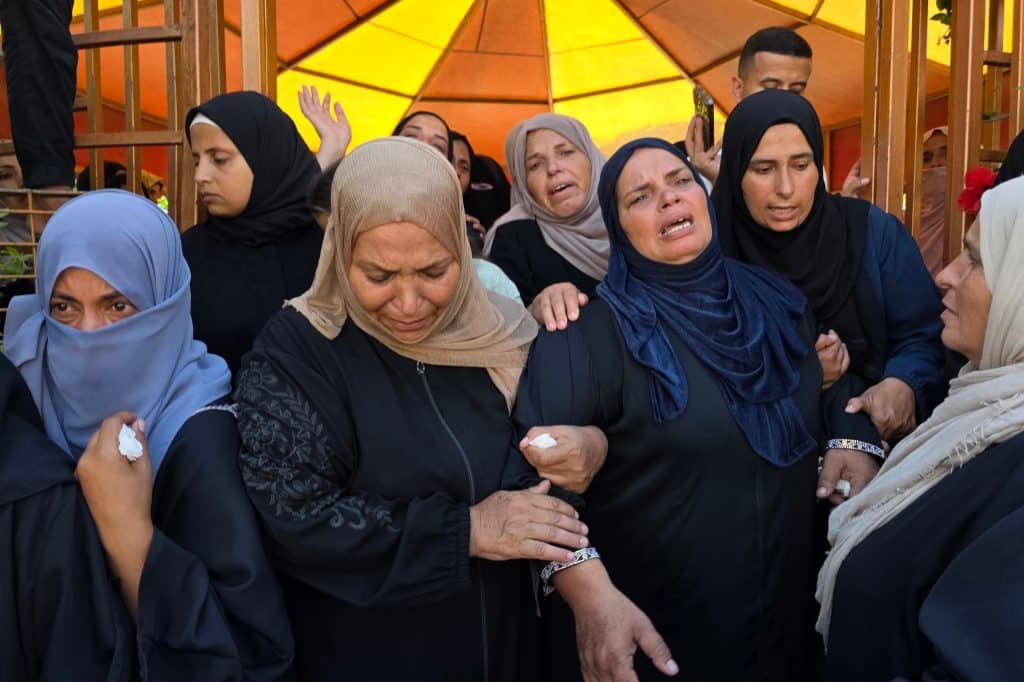
“When the missile hit, no one could see anything,” Saed Abu Daraz, Siwar’s uncle, recalled. “The entire area was engulfed in flames.”
But within moments, he said, chaos gave way to horror. “Suddenly, I saw Siwar lying on the ground beside me while her mother was still holding her. The blast had torn her mother’s body in half, and another piece of shrapnel hit Siwar in the head. Her entire brain was outside her skull.”
For several moments, he said, he was unable to react. “I didn’t know what to do, where to go, or even how to move. What I saw was beyond anything I could bear.”
“How can anyone evacuate a home, or even a tent, in one or two minutes?” he added. “They ordered us to leave, then bombed us almost immediately.”
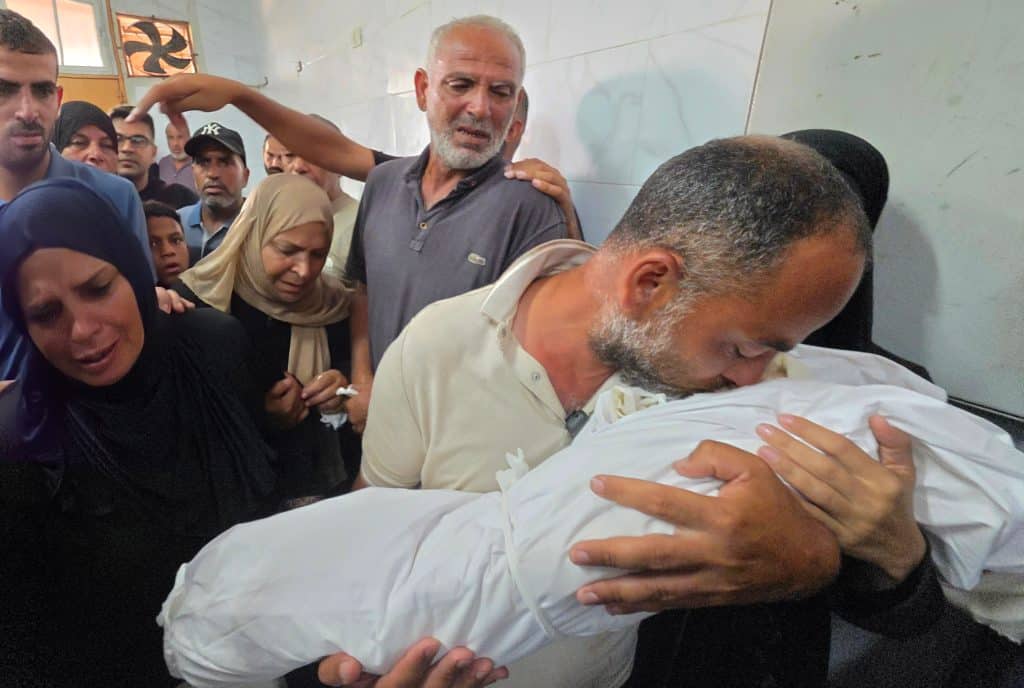
According to Abu Daraz, Diana and her daughter were exiting their tent and attempting to comply with the evacuation order when they were struck.
“I accept what God has written for me. We will all die, whether today or tomorrow,” said Thaer Abu Daraz, the little girl’s father, in video testimony obtained by Mondoweiss. “But God chose this little girl to be among the martyrs, and He chose her mother to remain with her, so that she would not be alone.”
Those nearby witnessed scenes they say will never leave them.
“Siwar was born, lived, and died during this war,” Siwar’s grandmother, Wijdan Abu Daraz, told Mondoweiss. “A single piece of shrapnel split my daughter in two and killed my granddaughter. What did either of them do?”
“They have killed everyone we loved,” Wijdan said. “They left no one behind for us.”
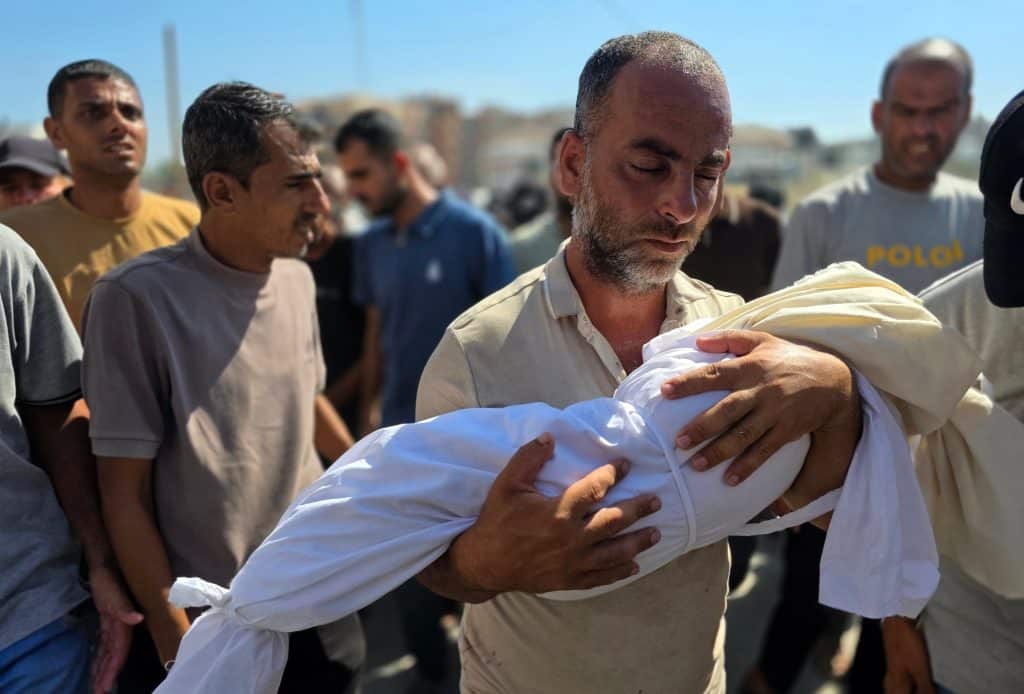
Safe zones are for killing
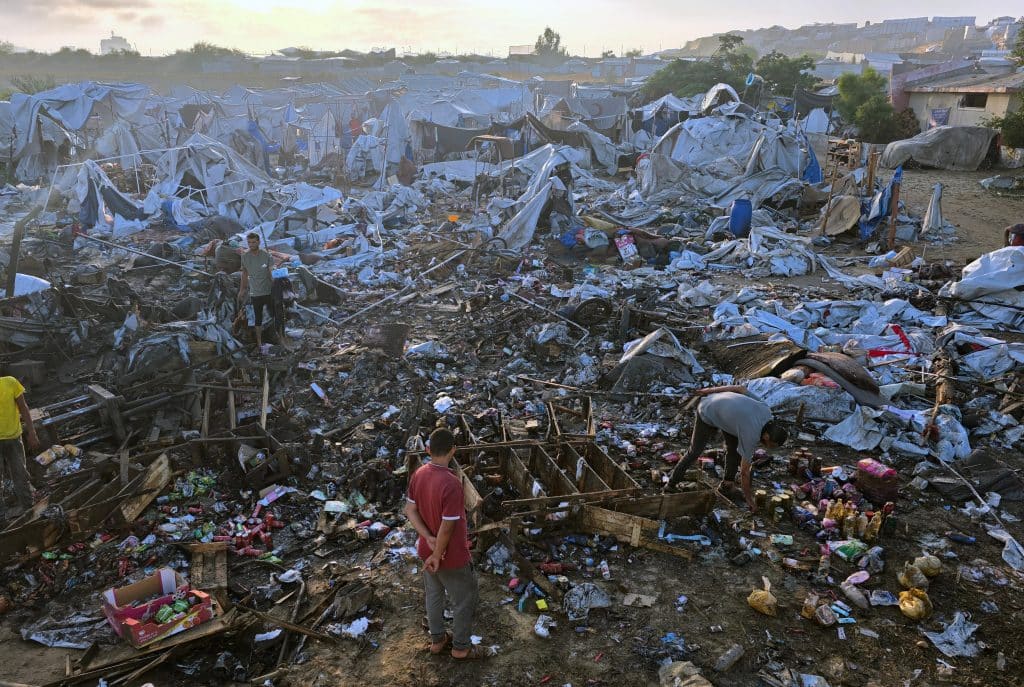
The Israeli strike left extensive destruction across al-Mawasi, according to video footage viewed by Mondoweiss. Dozens of tents were reduced to ashes and rubble, forcing many families into yet another cycle of displacement.
Hani Abu Khater, a resident of the area, said four people received phone calls from the Israeli military instructing them to evacuate a perimeter extending approximately 150 meters in every direction.
Residents immediately complied, he said, but the bombardment began before the evacuation period had ended.
According to Abu Khater, the strike affected 15 tents belonging to his extended family, another 25 tents belonging to neighboring families, and more than 30 other tents nearby.
He estimated that at least 100 tents were destroyed, displacing 100 families.
“Nothing is left,” he said. “No food. No tents. No shelter. No water. No clothes. Even our personal documents and the few valuables we still had were lost in the bombing.”
Abu Khater said he has lived in al-Mawasi for more than thirteen months, after relocating from the Ma’an neighborhood in eastern Khan Younis during the war, on the instructions of the Israeli military.
Al-Mawasi, which has been repeatedly designated by the Israeli military as a “safe zone,” has become something very different, Abu Khater said.
“These zones are safe for only one thing: mass killing,” he explained, adding that this was the fourth strike on the area in the past ten days.
In Abu Khater’s assessment, the munition used was not a missile but what he described as an “explosive barrel,” causing widespread devastation and leaving almost nothing standing.
“This is the peace Trump promised Palestinians, and this is the ceasefire Israel is observing,” he said.
Tareq S. Hajjaj
Tareq S. Hajjaj is the Gaza Correspondent for Mondoweiss and a member of the Palestinian Writers Union. Follow him on Twitter/X at @Tareqshajjaj.

It’s all a prelude to building Israeli settlements in Gaza. After all, isn’t this The Ancestral Homeland of the Jewish People?
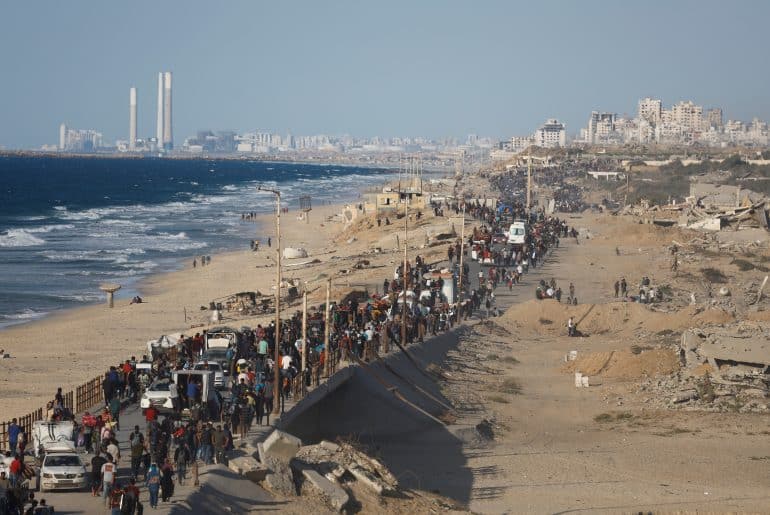
Israeli Finance Minister Bezalel Smotrich calls for the immediate establishment of Jewish settlements in the Gaza Strip’s northern perimeter, claiming nearly 70% of the strip is already occupied by the Israeli military.
Israel’s Smotrich calls for settlements, ‘conquest’ of Gaza Strip | Gaza | Al Jazeera