On the basis of alleged “anti-Semitic tropes,” numerous critics of Israel, many of them writers of color, have been accused of bigotry for their criticisms of Israel. The latest is Ali Abunimah, accused by Matt Seaton of NYRB. Meantime, you can say anything you like to dehumanize Palestinians and no one in the mainstream will call you out.
Bari Weiss’s book argues that if you embrace Zionism you will suffer ostracism and career reputational damage. But the last week she’s gotten treatment other authors only dream about, from cable networks to the 92d Street Y to a big-media party where everyone bewailed social media (because the leftwing dares to advocate for Palestinian human rights).
Should Zionism be protected from criticism because many Jews take Zionist doctrine to be essential to their own self-conception. No, Joseph Levine says, because it is reasonable in considering the history of the Zionist project to argue that it is unjust, without being written out of the discourse as a bigot.
If we do not distinguish between valid critiques of the policies of the Israeli state and anti-Semitism, we are allowing rightwing forces to weaponize anti-Semitism, suppressing freedom of speech and open debate, and making the term anti-Semitism meaningless at a time when it is critical to identify and oppose it.
Why is an anti-Semite not called a “Semitophobe?” Timo Al-Farooq says that what at first glance might seem like a linguistic mishap is in fact a reflection of the hierarchy of discrimination in the Western discourse on racism.
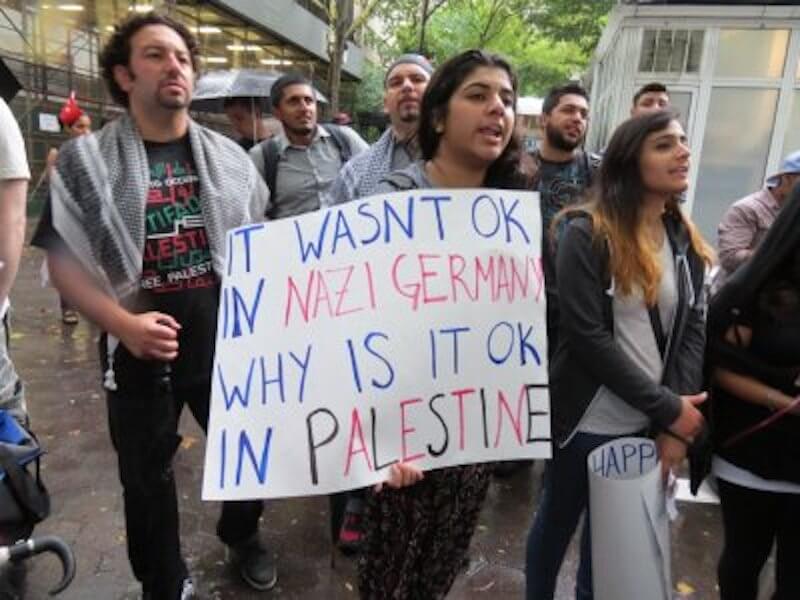
Pro-Israel groups and Republicans have been lying about Ilhan Omar’s boycott bill and it seemingly just paid off. The State Department has updated its working definition of antisemitism to include comparisons between current Israeli policies and those of the Nazis.
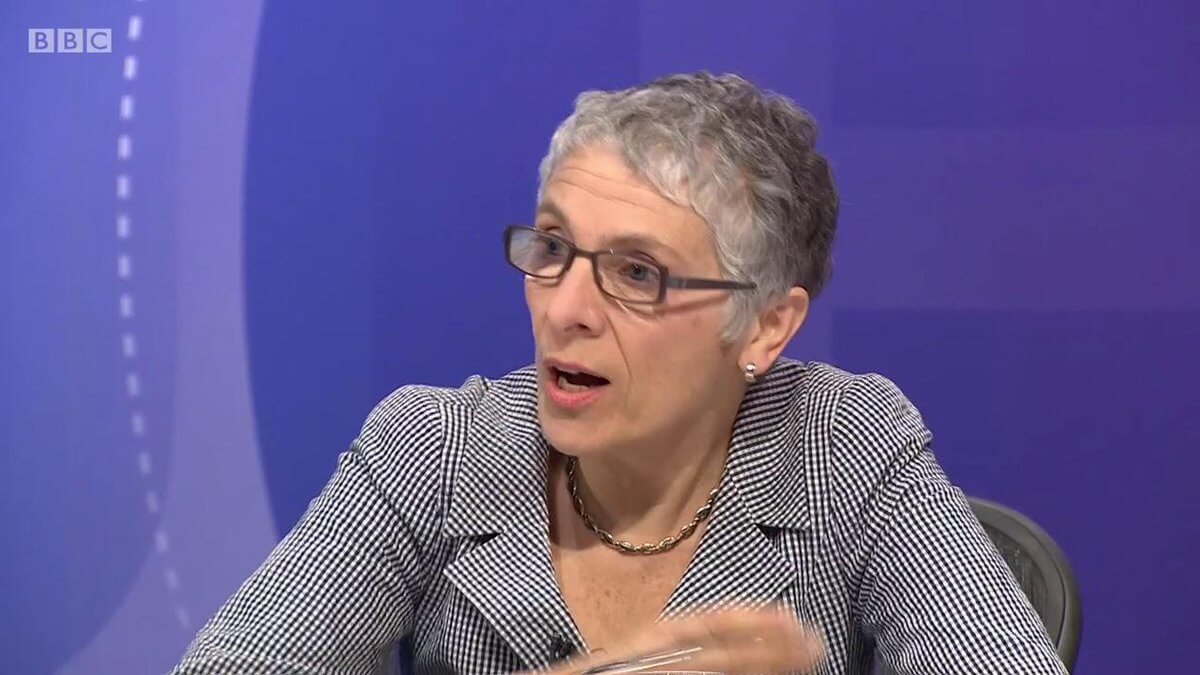
Robert Cohen debates Melanie Phillips on BBC radio. “The Jews are the only people for whom the Land of Israel was ever their national kingdom,” she says. He says, “That’s a muddle” of Zionism and Judaism.
Haidar Eid writes Palestinians can never endorse anti-Semitism and looks at models within popular movements and supporters of BDS who have championed the rights of all and worked in partnership with Jewish supporters of Palestinian human rights.
After Marc Lamont Hill gave a speech at the U.N. last November calling for equal rights in Palestine, his employer CNN called the next day and fired him. “They said, ‘Your speech was not in line with our values,'” he recalls to Palestinian journalist Janna Jihad. “I said, which part of the speech? They said, The speech.” Hill was shocked. “I’m prone to saying crazy shit. I just didn’t do it that day!”
When Trump called Ilhan Omar a “terrorist,” he was echoing an Israeli tactic against Palestinian dissenters. The charge has been used against sitting lawmakers, like when former Defense Minister Avigdor Lieberman called Hanin Zoabi a terrorist, and against poet Dareen Tatour and anti-occupation activist Ahed Tamimi.