In a recent series of speeches and interviews, Biden officials have attempted to put a positive spin on their foreign policy legacy. The reality is that Biden’s legacy is, and will remain, one of genocide.


In a recent series of speeches and interviews, Biden officials have attempted to put a positive spin on their foreign policy legacy. The reality is that Biden’s legacy is, and will remain, one of genocide.

As hopes for a ceasefire draw closer, plans for the “day after” in Gaza are being debated. In interviews with Mondoweiss, Hamas representatives lay out their visions for reconstruction and post-war governance, and the obstacles that lie in their way.
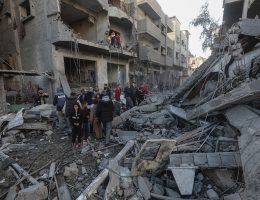
In recent days, Gaza ceasefire talks have seemed to gather unprecedented momentum, but until Israel’s far-right government concedes it is ready to abandon the genocide any predictions of the horror finally ending should be taken with skepticism.
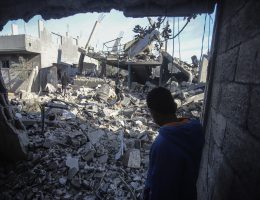
With the fall of Syria’s Bashar al-Assad, the truce between Hezbollah and Israel, and reports of progress in Gaza ceasefire talks in Cairo, Palestinians in the Strip are hopeful their reality may soon change.

In the wake of the ceasefire deal between Israel and Lebanon, there has been speculation about a similar deal between Israel and Hamas to finally bring about an end to the genocide in Gaza. But are there reasons to think this time may be different?

Unpacking the ceasefire deal reached between Israel and Hezbollah and what it means for a potential regional war and the ongoing genocide in Gaza.

The ceasefire agreement between Hezbollah and Israel has accomplished Israel’s goal of decoupling Gaza from Lebanon. But while the future of the Axis of Resistance remains unclear, so does Israel’s own strategic path forward.

A ceasefire deal between Israel and Hezbollah took hold on Wednesday. As both sides halted their military operations, thousands of displaced Lebanese began returning to their homes and villages that had been under a months-long Israeli bombardment.

As Israel expands bombing in Lebanon, Hezbollah rockets have reached reached Akka, Haifa, Tiberias, and the lower Galilee. Meanwhile, in Gaza, Israel returned a truckload of decomposing bodies without identification that it had abducted from Gaza.

Multiple U.S. officials are admitting a ceasefire will not be reached during the remainder of Joe Biden’s presidency.