The last decade in Israeli politics was all Netanyahu, all the time. The Israeli left twisted itself into a pretzel trying to get rid of Netanyahu and forgot about trying to end apartheid. Now it looks like the great hate monger is gone and the issues that matter may matter again.
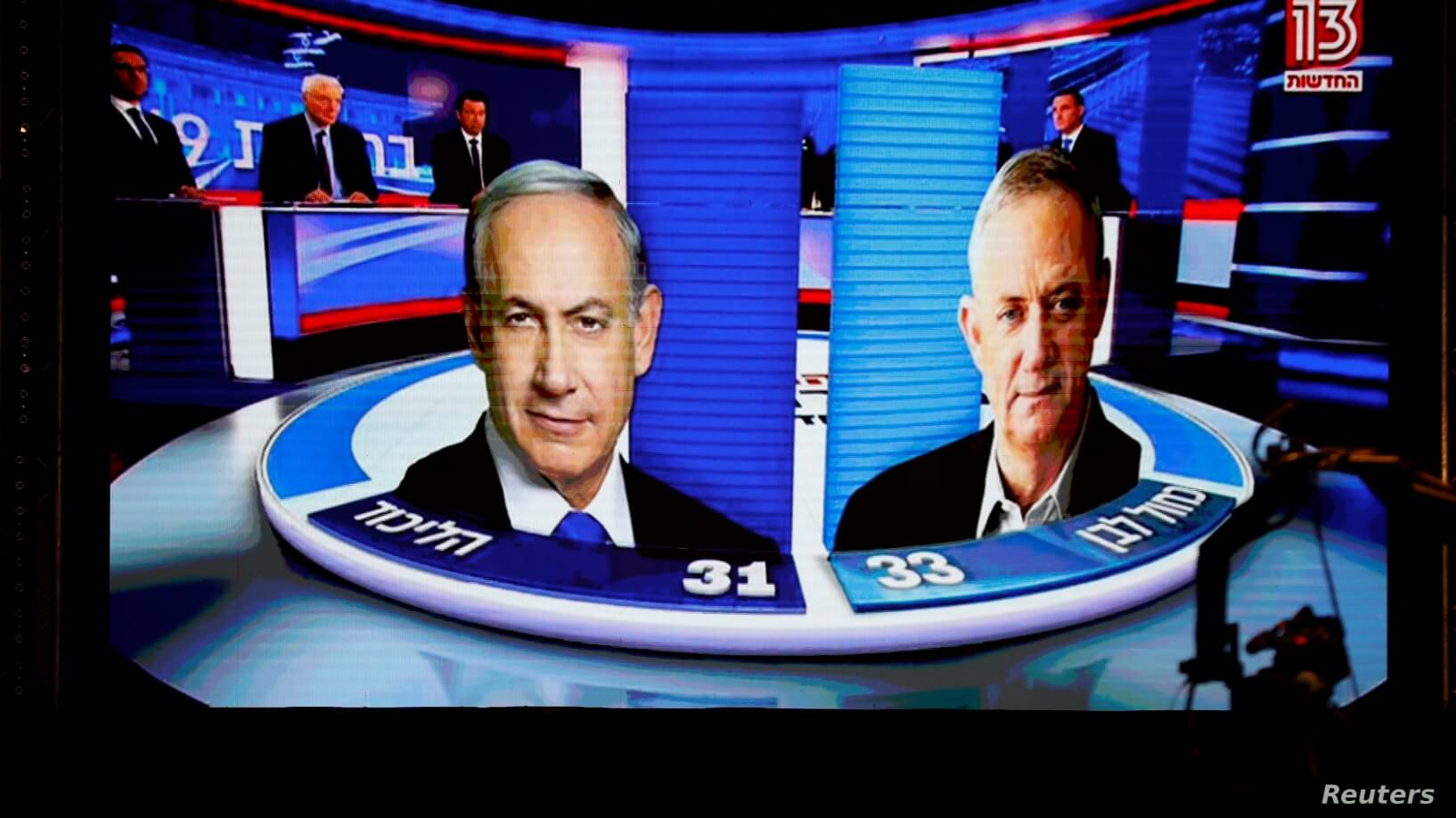
Israelis went back to the polls for a second time in six months in a combative snap election between incumbent Prime Minister Benjamin Netanyahu who is seeking his fifth term in office and already serving a record 13 years, and former general Benny Gantz. The first exit polls show there is no clear winner in sight.
The Israeli election challenges Americans to recognize what “Jewish democracy” has produced: a rightwing society in which all the politicking has been on the far right, and even the center-left Blue White calls for expanding the illegal occupation and pounding Gaza. Palestinian parties are a sign of real democracy, but leading Jewish parties want nothing to do with them.
With only two days to go, the Joint List was campaigning for a last push to unseat Netanyahu is Israel’s snap election. “It’s simple,” Ayman Odeh, head of the Joint List told Mondoweiss. If 65 percent of Palestinian citizens of Israel vote on Tuesday, “we will bring down Netanyahu.”
After the Israeli election, there will be no end to occupation, no two-state solution. Israeli politics have moved so far to the right, that it is hard to understand why the US media continues to refer to Netanyahu’s opposition as a “center-left” coalition. American liberals have themselves to blame, for their passive opposition to expansive settlements and apartheid.
Following outrage over a message on his official Facebook page telling voters “Arabs want to annihilate us all,” Facebook has suspended the chatbot feature of Prime Minister Benjamin Netanyahu’s page.
Today is the last day Israeli election polls may be published before the vote, and the latests gives Likud a substantial lead over Gantz’s Blue and White party. This suggests Benjamin Netanyahu may be in a good position to form a new right-wing government.
With the topic of this year’s Israeli election focused heavily on annexation, the livelihoods of hundreds of thousands of Palestinians living in Area C — the more than 60% of the West Bank under full Israeli control — are hanging in the balance. Mondoweiss spoke to three Palestinians living in areas of the West Bank– in close proximity to settlements, Area C, and the Jordan Valley — that would likely be the first ones affected if Netanyahu sees his plans through.
Benjamin Netanyahu’s plan to annex the Jordan Valley has simply made obvious what Palestinians have known for generations: Israel is uninterested in affording them their right to self-determination.