We need to build an infrastructure of confrontation to resist Israel’s coming onslaught on the West Bank. The first step to doing so is by building self-reliance and reclaiming food sovereignty.


We need to build an infrastructure of confrontation to resist Israel’s coming onslaught on the West Bank. The first step to doing so is by building self-reliance and reclaiming food sovereignty.

Media sources have misunderstood how the leadership of Hamas operates, drawing simplistic binaries between the “moderate” Ismail Haniyeh and the “extremist” Yahya Sinwar. In reality, Hamas decision-making is far more institutionalized.

If elected president, many believe that Kamala Harris will continue Joe Biden’s doomed policy in Gaza.
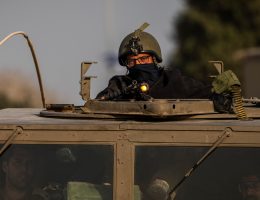
Israel ordered the “Hannibal Directive” on October 7 by ordering the killing of captive Israeli soldiers and civilians. But the U.S. media continues to hide the truth.
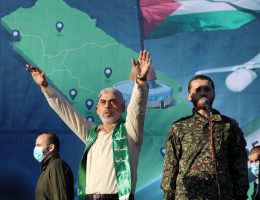
The concepts of self-sacrifice, asceticism, and security awareness were crucial to Yahya Sinwar’s philosophy of resistance. The revolt that culminated with October 7 was the direct application of his political thought.
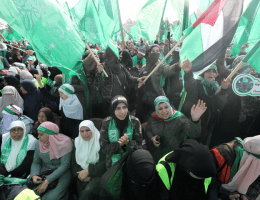
The Left must confront this basic fact. One cannot claim solidarity with Palestine and dismiss, overlook, or exclude Hamas.
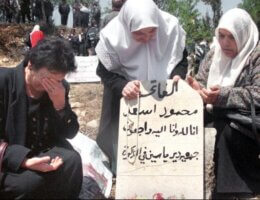
Israel is guilty of the same massacres and atrocities it has accused Palestinians of committing on October 7. My family survived one of those massacres in the village of Deir Yassin on this day 76 years ago.
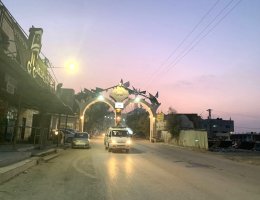
Since October 7, my friend Aseel watched as her community in Jenin refugee camp became a target of Israeli attack. “They have even been aggressive toward the infrastructure, as though every inch of our city was resisting them,” she said.

Aharon Barak, Israel’s ad-hoc judge for the Gaza genocide case at the ICJ, is acting less like a judge and more like a mouthpiece for official Israeli propaganda.
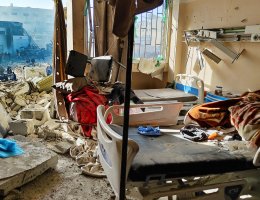
Dozens of bodies are still being recovered from the rubble of a destroyed and burnt al-Shifa Hospital, following a two-week Israeli raid and siege on the hospital.