As the world has focused on the Gaza genocide, a massive Israeli campaign of violence and displacement has taken place across the West Bank. Photojournalist David Lombeida tells the stories of families in the South Hebron Hills and Jordan Valley.


As the world has focused on the Gaza genocide, a massive Israeli campaign of violence and displacement has taken place across the West Bank. Photojournalist David Lombeida tells the stories of families in the South Hebron Hills and Jordan Valley.
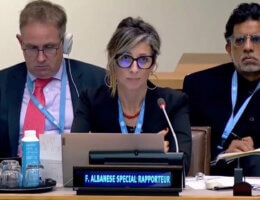
A new report by Francesca Albanese, the UN Special Rapporteur on the situation of human rights in the Palestinian territories, warns that Israel’s genocide in Gaza is spreading to the West Bank.

Documenting one year of revolt from the occupied West Bank to the East Coast.
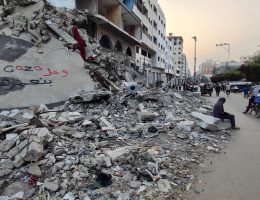
Palestinians have endured 76 years of the Nakba and now the 2024 genocide. Despite Israel and the West’s desire to erase our existence, we continue to declare, “We won’t leave.”

After a year of near-constant Israeli military raids on their homes and private spaces, women are some of the most affected among the Palestinian residents of Nur Shams refugee camp in Tulkarem.

While Israel has been carrying out a genocide against Palestinians in the Gaza Strip, its military and settlers have been waging another campaign of ethnic cleansing in the West Bank, moving ever closer towards Israel’s goals of annexation.

Israel’s onslaught against the Palestinian people has systematically targeted children in both Gaza and the West Bank. The result is a war against an entire generation.

Joe Biden released a new statement condemning the killing of Aysenur Eygi the day after repeating an Israeli claim that she was killed accidentally by a bullet that had “ricocheted off the ground.”

Palestinians in Nablus held a funeral procession for a Turkish-American activist killed by Israeli forces in Beita. Meanwhile, Israel continued to close its borders with Jordan for the second day in a row following a shooting at Allenby bridge.

When a foreign government and its citizens kill American nationals, it usually raises media outrage in the U.S. But, Israel’s recent spate of violence against Americans, including the killing of Ayşenur Ezgi Eygi, has barely received coverage.