

I was in middle school when the Second Intifada broke out and I first became aware of the media and the way it framed events. I was too young to understand all the details, but I understood the context from which the uprising erupted.
In the years before, I had grown up listening to stories about the First Intifada, the popular mass uprising of the late 1980s, and about the hope and optimism of a future in an independent Palestinian state. I remember the day Yasser Arafat arrived in Ramallah: the celebrations, the tears, my father shaking hands with and hugging the Palestinian police officers patrolling the streets of his city for the first time. Then I began to grasp the changes happening around me.
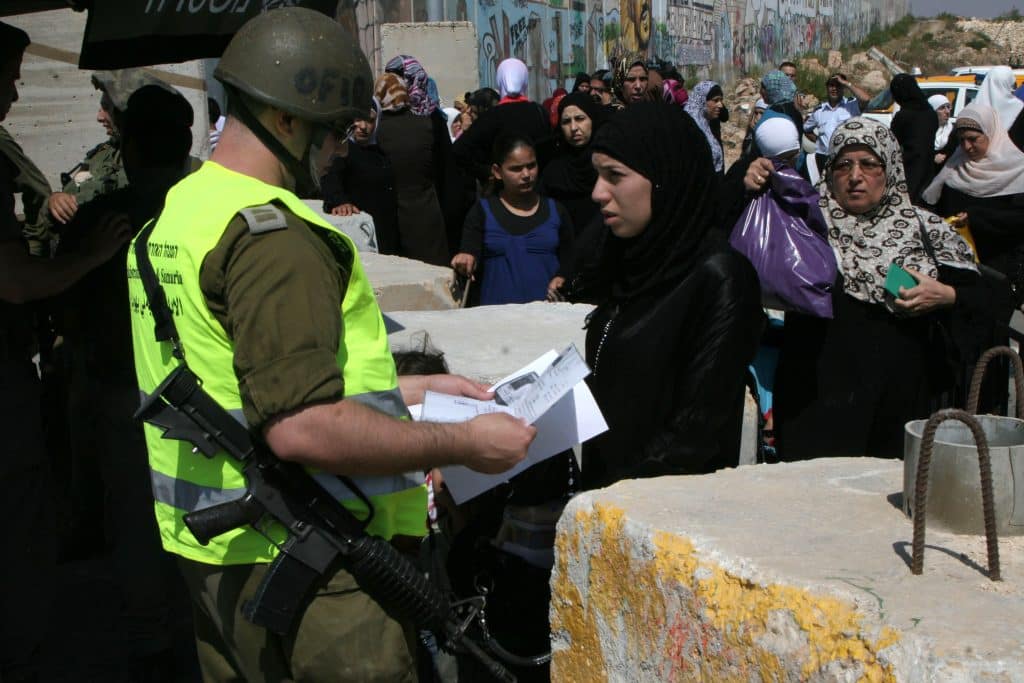
I first learned what a checkpoint was as a child, during the “peaceful” years of the Oslo process. Almost every time my family and I drove back home, we had to stop because Israeli soldiers had set up a flying checkpoint. I remember the fear, and the long waits during which my brother and I would fall asleep in the car. I remember how my uncles, who had farmed all their lives, could no longer make a living from the land. The market was flooded with Israeli produce, and they could no longer reach parts of the family’s land, cut off by newly built Israeli roads and expanding settlements.
I remember the anger around me when Israel seized Jabal Abu Ghneim in Bethlehem, one of the city’s last green spaces. I remember news of protests, and of protesters being shot. Today, the Israeli settlement of Har Homa sits there. I also remember people’s frustration at no longer being able to go to Jerusalem freely — not even on religious holidays, even though they had family and property there. Then came the Second Intifada, and with it, my passion for following the news — and, eventually, for reporting it.
None of what I had understood as a child made it into the international news. All that was there were events, most of them bloody. First, clashes between protesters and Israeli soldiers, with a daily toll of protesters killed or injured. Then the tanks, the helicopters firing missiles, and the suicide bombings. Little by little, I came to see what Palestine looked like in the international news: a crazy place, full of violence that nobody could explain, inhabited by crazy, violent people. Years before I studied it in college, I could already identify what was missing: context.
In college, I was taught that context is the part of a news story that provides background. But over my years working as a journalist in Palestine, I have learned that the absence of Palestine’s context, accumulated over decades, has grown into a stand-alone story of its own — one that can’t be covered in a single article, news report, or even a documentary series.
Time and time again, I find myself in back-and-forth exchanges with editors because I slip into explaining the context behind the context, to the point where the news itself becomes the background. Most international journalists, I suspect, find it too complicated to untangle, which is why they keep jumping from one big, bloody event to the next. Perhaps some of them aren’t interested in learning the context in the first place.
But it doesn’t stop there. Ignorance of the Palestinian context has allowed for a gradual, slow-burning alienation of the Palestinian people from the conscience of millions around the world. It is cruelly simple: if you don’t know someone’s story, you can’t empathize with them.
In trying to walk the fine line between providing the context of Palestinian lives and sticking to the news angle — without turning every report into a history lecture — I noticed that we Palestinian journalists have developed an instinct for storytelling as an integral part of reporting. It might sound like a cliché, but it’s true: telling stories is the best way to convey a complicated story in the simplest way possible, and Palestinians have countless stories they want to tell the world.
But here, another realization kicks in: the stories we tell about other people are nothing but small pieces of our own ongoing, collective story. At some point, as a Palestinian journalist, you no longer know whether you are reporting your country’s news, or whether that reporting has become the vehicle through which you are trying to tell your own story.
It is a heavy realization, because you come to understand how invisible you, your community, and your entire existence have been for decades — to the point that your whole professional career has been nothing but a desperate attempt to be recognized.
It is not a romantic idea that makes you proud of what you do. On the contrary, it is a devastating reality that makes your heart sink.
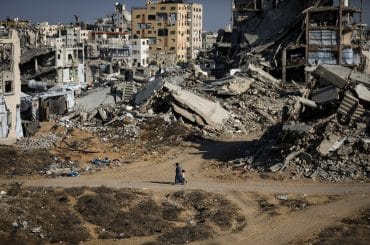
It is even more devastating to realize that we are making this attempt too late, because a genocide has already taken place and been normalized.
But Palestine hasn’t disappeared. Our story hasn’t ended. Millions around the world are waking up and seeking to learn Palestine’s story.
This is why, although the past three years of genocide are the biggest and bloodiest story we must continue to cover, there is a larger context — one that is a long, stand-alone story of its own and needs to be told. It is the story of a small, proud people on the eastern shore of the Mediterranean, carrying a full century of defeat and resilience, hopes and disappointments, dreams and endless memories, and wounds that are still open. A people with so much heritage, poetry, and beauty woven into its pain, and so much passion to share what it has with the world.
We will continue to tell it until it is fully, fairly, and properly heard.
Dear Muaddi, I am an aspiring journalist, motivated by writers just like you . This article is my first lesson on journalism. What a great start. I used to say in my business meetings, there is a story behind story … you articulated it so well.
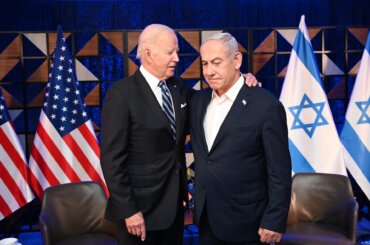
Election Committee Rejects Move to Bar Center-Left Democrats; All Arab Parties Disqualified: The Central Elections Committee earlier rejected petitions seeking to bar far-right parties Otzma Yehudit, Religious Zionism and Zehut
“On Wednesday, the committee voted to disqualify Hadash lawmaker Ofer Cassif and Balad chairman Sami Abu Shehadeh from running in the election. It also voted to disqualify the United Arab List and Joint List party slates.
Cassif’s disqualification determined that he rejects Israel’s existence as a Jewish and democratic state, while Abu Shehadeh was disqualified on the grounds of supporting armed struggle or a terrorist organization against Israel.
The committee voted to bar the United Arab List and Joint List on grounds including rejecting Israel’s existence as a Jewish and democratic state and supporting armed struggle against it. The United Arab List was also disqualified on grounds of incitement to racism.”
The Supreme Court makes the final decision.
RE: I first learned what a checkpoint was as a child, during the “peaceful” years of the Oslo process. Almost every time my family and I drove back home, we had to stop because Israeli soldiers had set up a flying checkpoint.
SEE: “Permanent Temporariness” | by Alastair Crooke | London Review of Books | March 3, 2011
[EXCERPT ~ with my emphasis] . . . A decade ago, I was a member of Senator George Mitchell’s staff on his first foray into the region, after he was asked to head a ‘fact-finding committee’ into the causes of the second intifada. Even then, Livni’s vision was evident in the Israeli strategy of excluding Palestinians from the body politic while making them subject to its methods of control. The Occupied Territories assumed an elastic, shifting geography in which the rule of law was suspended under cover of the law. It was [Ariel] Sharon who pioneered the philosophy of ‘maintained uncertainty’ that repeatedly extended and then limited the space in which Palestinians could operate by means of an unpredictable combination of changing and selectively enforced regulations, and the dissection of space by settlements, roads Palestinians were not allowed to use, and continually shifting borders. All of this was intended to induce in the Palestinians a sense of permanent temporariness. Maintaining control of the Occupied Territories keeps open to Israel the option of displacing Palestinian citizens of Israel into the Territories by means of limited land swaps. It also ensures that Israel retains the ability to force future returning refugees to settle in their ‘homeland’, whereas a sovereign Palestinian state might decline to accept the refugees. It suits Israel to have a ‘state’ without borders so that it can keep negotiating about borders, and count on the resulting uncertainty to maintain acquiescence. . .
ENTIRE COMMENTARY ~ http://www.lrb.co.uk/v33/n05/alastair-crooke/permanent-temporariness
Thanks to Qassam Muaddi for his insightful article on understanding Palestinians. Perhaps he could advance public understanding of the Mondoweiss tee and tote slogan.