The American order that gave Israel stability now constrains Israel’s expansion. In response, Israel is dismantling U.S. hegemony in the region, turning allies Turkey and Egypt into enemies, and working to end the U.S.’s ability to restrain it.
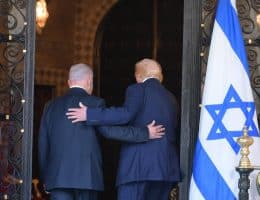

The American order that gave Israel stability now constrains Israel’s expansion. In response, Israel is dismantling U.S. hegemony in the region, turning allies Turkey and Egypt into enemies, and working to end the U.S.’s ability to restrain it.

The flare-up in violence between Iran and Israel on June 8 was less about the two countries’ immediate goals and more a reflection of Iran’s long-term efforts to reassert a united axis of resistance to U.S.-Israeli hegemony in the region.

Israel has been exposed as a dependent colony that relies on the West for its military adventures. And even still, it has failed to turn this advantage over Iran into strategic success. The Israel doctrine appears to be meeting its limits.

The collapse of the Assad regime brought joy to many, but signs suggest the worst may still lie ahead for Syrian sovereignty and regional prospects of liberation from Western domination.
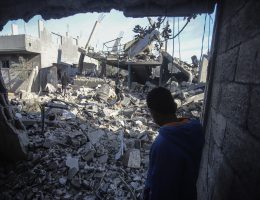
With the fall of Syria’s Bashar al-Assad, the truce between Hezbollah and Israel, and reports of progress in Gaza ceasefire talks in Cairo, Palestinians in the Strip are hopeful their reality may soon change.

The October 7 Hamas attack unraveled truths across the region, reopening questions of the future that lay dormant for years. Now, with the fall of Assad, the power map is being redrawn, presenting new threats and possibilities.

The ceasefire agreement between Hezbollah and Israel has accomplished Israel’s goal of decoupling Gaza from Lebanon. But while the future of the Axis of Resistance remains unclear, so does Israel’s own strategic path forward.
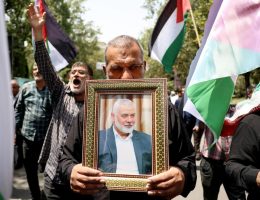
On the martyrdom of Ismail Haniyeh as Iran inaugurated a new president, and the ways the Martyr may enable us to see a path forward to break a siege that stretches from Tehran to Gaza.
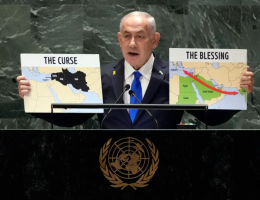
Israel has been able to insulate itself from the effects of the economic blockade imposed by the “Axis of Resistance” through supply chain warfare in the Middle East and the broader region.
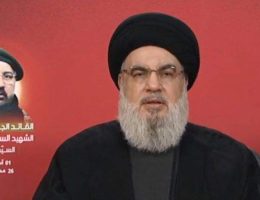
In a strident speech on August 1, Hezbollah leader Hasan Nasrallah said that the fighting with Israel has “entered a new phase” that goes “beyond supporting Gaza,” vowing an “inevitable” response to Israel’s Beirut bombing.