On Monday, Donald Trump and Benjamin Netanyahu will meet to discuss the next steps in their plan to reshape the Middle East. Their vision includes expanding normalization, disarming adversaries, and ending any Palestinian aspirations for freedom.


On Monday, Donald Trump and Benjamin Netanyahu will meet to discuss the next steps in their plan to reshape the Middle East. Their vision includes expanding normalization, disarming adversaries, and ending any Palestinian aspirations for freedom.

Israel has been exposed as a dependent colony that relies on the West for its military adventures. And even still, it has failed to turn this advantage over Iran into strategic success. The Israel doctrine appears to be meeting its limits.

The war across the Middle East is part of a desperate effort to preserve Western superiority. All the fighting — whether in Palestine, Lebanon, Syria, Yemen, or Iran — is due to Zionism, and its role of enforcing the crushing force of the West.

As Israeli airstrikes throughout Lebanon continue, the Lebanese state is threatening to disarm Palestinian factions in the refugee camps. Residents fear this is a prelude to an all-out assault on the camps — and the Palestinian cause.

The failure of the Lebanese government to protect against Israeli attacks is leading Lebanon down two roads: either Hezbollah will re-enter the war in defense of the Lebanese people, or the government will prevail and content itself to sit back.

The IMF and World Bank are conditioning reconstruction funds on Lebanon’s normalization with Israel and disarming Hezbollah. In the Dahiya suburb of Beirut, the people who’ve lost their homes in the war think this is unacceptable.
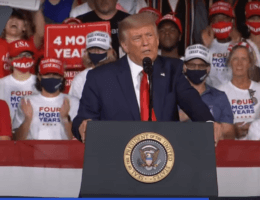
Michael Arria speaks with expert Sina Toossi about the influence neoconservatives will hold in the new Trump administration and what this could mean for policy toward Iran and the broader Middle East.

Joseph Aoun’s election this week as Lebanon’s new president reflects a new push toward a unified Lebanon. As the ceasefire time frame between Israel and Hezbollah ends there are signs Lebanon will be more capable of resisting Israeli aggression.

60 Minutes’s story on Israel’s pager attack that killed dozens and injured thousands of Lebanese featured no Lebanese voices and was told completely from the Israeli perspective. In the process, it justified war crimes in Lebanon and Gaza.
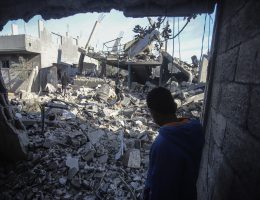
With the fall of Syria’s Bashar al-Assad, the truce between Hezbollah and Israel, and reports of progress in Gaza ceasefire talks in Cairo, Palestinians in the Strip are hopeful their reality may soon change.