Tag

Nakba

Browsing

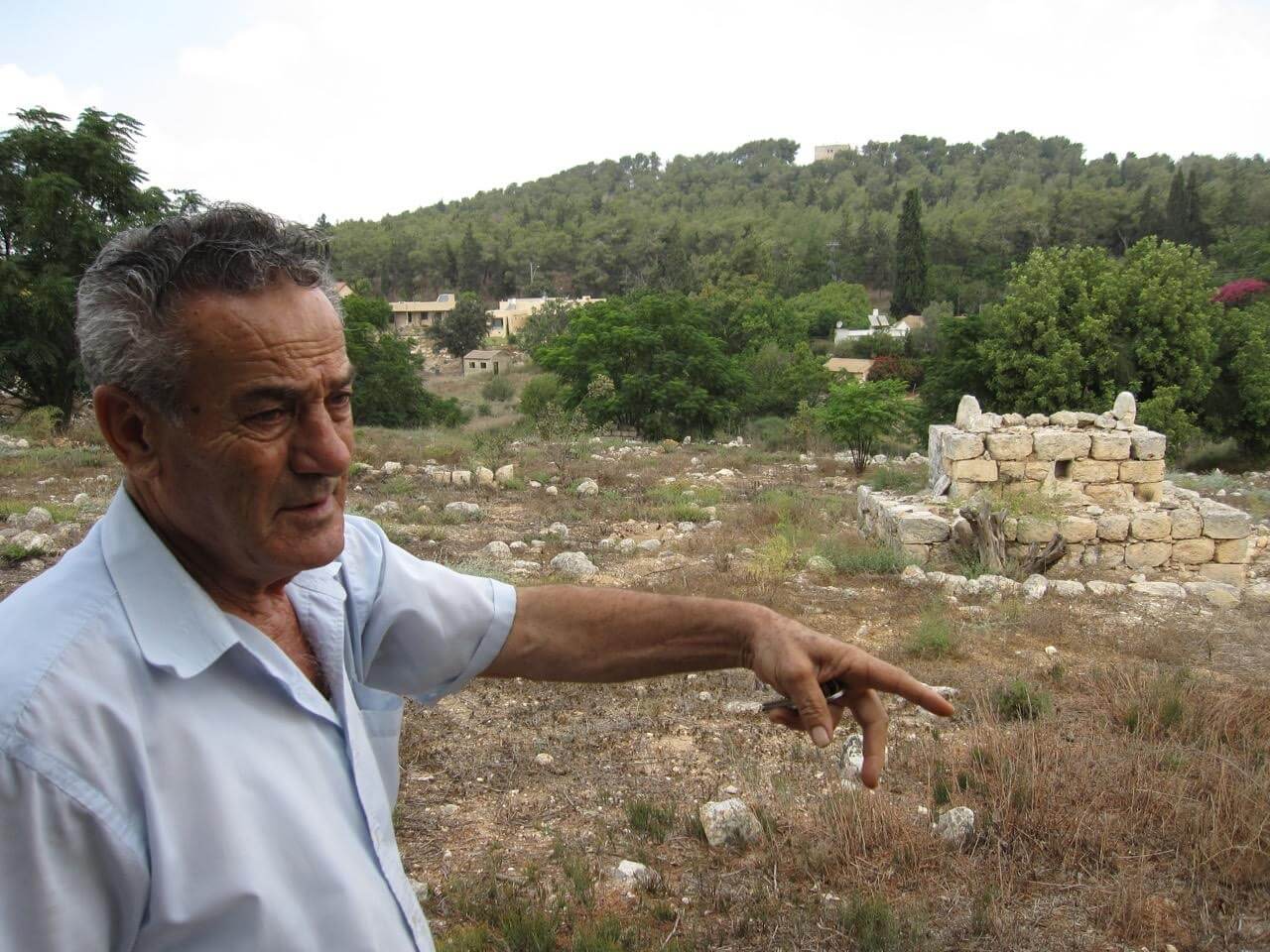
Mersiha Gadzo talks to villagers who were expelled from towns outside of Jerusalem in 1967, where today an Israeli park and popular picnic spot is built over the rubble of the destroyed Palestinian houses, “Twelve-year-old Ahmad Ali Zaid awoke at 5 a.m. on June 6, 1967, to the sound of loudspeakers blaring outside his home, demanding that the sleeping residents of Beit Nuba village immediately leave their homes. ‘Leave your homes, leave the village. Go to Jordan; this is a military zone,’ the voice commanded as Israeli tanks rolled through. ‘Anyone who doesn’t leave will have their house demolished on top of them.’ In their pajamas, with no time to even put on shoes, residents frantically rushed outside.”

Tikva Honig-Parnass discovers a letter she wrote to her family in October 1948, inked on letterhead she found in a gas station that had belonged to a Palestinians who was likely expelled by her unit. Looking back Honig-Parnass reflects how it came to be that she never considered who owned the gas station, and what happened to him, a skill she developed as a youngster in Israel’s 48 Generation: “This complete ignoring of the personhood of the “enemy,” the serenity lacking in all feeling-without gloating or hatred were characteristic of the remote stance, the apparent lack of affect, of the 48 Generation towards the Palestinian Arabs. This stance was congruent with the perception of the latter as an “environmental nuisance” which should be dealt with in a rational manner, and without hatred, and when necessary-as in the case of the stationary–to make use of the spoils left behind after their removal. By then I was already experienced in the mental acrobatics involved in ignoring the ‘nuisance.'”

Palestinians on Monday commemorated the 69th anniversary of the Nakba, meaning “catastrophe,” during which over 750,000 Palestinians were forcibly displaced from their homes in 1948, as Israel was declared a state. While the Right of Return for Palestinian refugees is generally at the center of all Nakba day commemorations, this year Palestinian prisoners took the front seat.

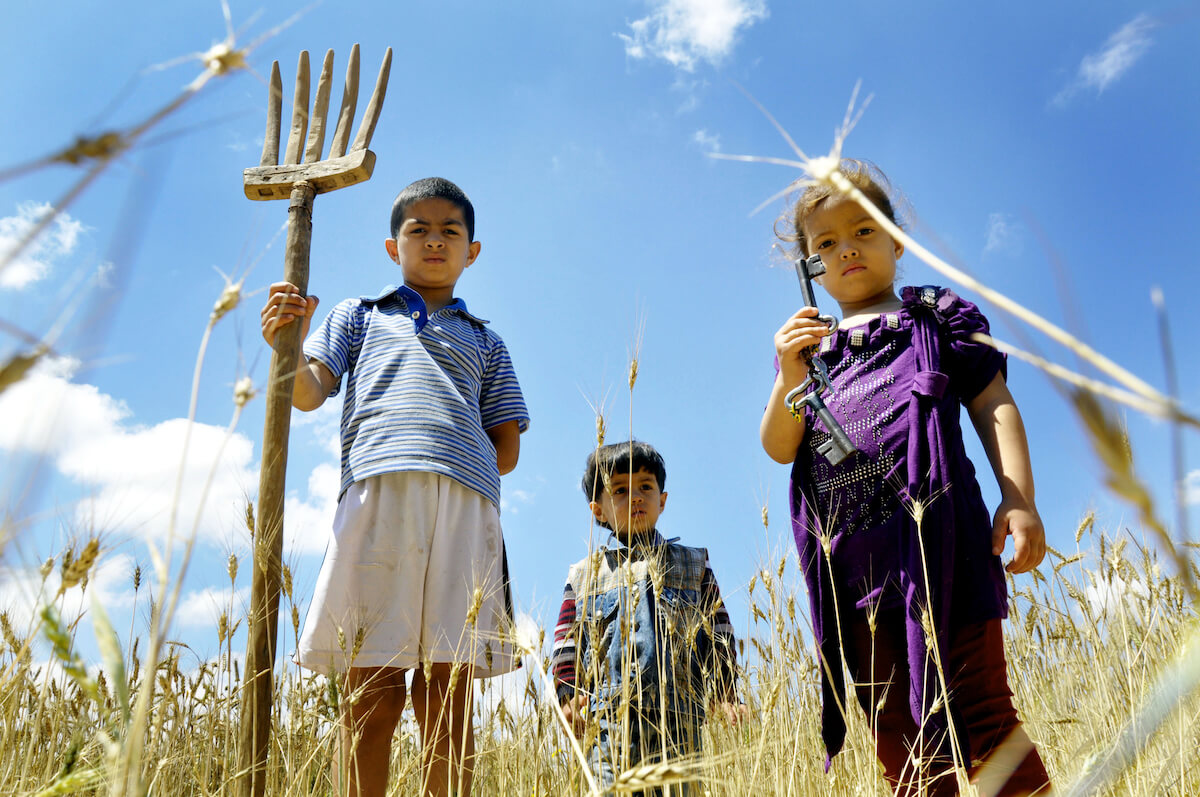
The granddaughter of 97-year-old Abdul Hadi Qudeh holds keys that he says belongs to a house his family were forced to leave after the establishment of Israel in 1948, as she poses for a photograph in her grandfather's field ahead of Nakba Day in Khan Younis in the southern Gaza Strip May 14, 2014. (Photo: Mohammed Talatene/ APA Images)

Nada Elia writes on Nakba Day, 2017: “I’m angry because I want to be normal, yet normalcy evades me, and I want to be post-nationalist, even if Palestine has never been allowed to become a nation. And I’m angry at the fact that, despite the century of abuse, we are one people (yes, a people) never allowed to be angry. This year, I don’t want to be grateful for being a survivor, “nice.” I want the right to be angry.”

I., a European living in Israel, explains why she decided to keep her kindergarten-aged daughter home from school when Israeli schools are mandated teach about the Holocaust to children as young as three years old: “Because of the decision other people made about when and how it is appropriate for our child to learn about genocide, we chose to keep her at home yesterday and today. We want our child to learn about injustice; moral, critical thinking; and courage. We want her to grow up to be strong, fair, kind and safe. And, we think that learning about blurry dangers in a distant past does not teach her that.”

Taha Muhammad Ali is an unlikely dramatic hero. His arms shake with age and infirmity, his legs occasionally buckle, and he often appears lost on stage, as if adrift in a vast expanse of sadness. But for an hour the story of this Palestinian poet has a vice-like hold on our attention and our hearts.

The one-man show Taha receives its English-language premiere on Wednesday at the Kennedy Center for the performing arts in Washington DC. It offers not only a rare chance to learn about one of Palestine’s finest poets, but provides a visceral account of what it was like to live through the Nakba – the Catastrophe that befell hundreds of thousands of Palestinians who were expelled from their homeland in 1948.

A Palestinian state is anathema to Zionism – and must therefore be kept in the realms of fiction. The Palestinian state does not arrive, because Israel doesn’t intend, and never has intended, for the Palestinian dream to come true. After Palestinians accepted a partition of the land and initiated the peace process, Israel came up with a charade to convince the world it meant business– what Yitzhak Shamir called the “teaspoon” process.

Israa Suliman writes from Gaza to the Standing Rock Sioux Tribe: “Although we are of different color, religion, culture and place, I have learned, as I read about the protests at Standing Rock, that we have much more in common than differences. When I read your history, I can see myself and my people reflected in yours. I feel in my core that your fight is my fight, and that I am not alone in the battle against injustice.”