Journalists in Gaza often face an internal conflict where you feel split between the pleasure of being able to tell people’s true stories and the concern that you might be judged for it because of who you are.
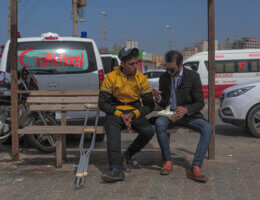

Journalists in Gaza often face an internal conflict where you feel split between the pleasure of being able to tell people’s true stories and the concern that you might be judged for it because of who you are.
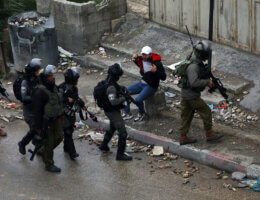
It is a maddening reality to report on Israel’s heinous crimes every day, forcing real people, who had real lives, real families, and real hopes and dreams, into boxes and statistics, in an attempt to make it digestible for audiences and readers, to try and help them understand the true scale of the oppression forced on the Palestinian people.
Is it worth leaving Gaza to seek work in foreign countries to build your future if you can’t do this at home?
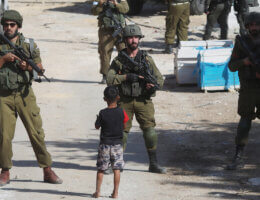
From the slaughterhouse, journalists become phone line operators – taking sound bytes from a wire and switching it to a phone plug. It’s an attempt to bring the distant near as the near seems to fade slowly. Yet as journalists from the slaughterhouse, we can also see that what seems like despair and doom, may only be a glitch in the wire. That, on the other end of the line, life still persists, even if the line is lagging.
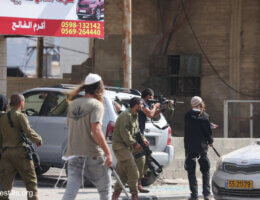
What happened in Huwwara for those four days was a microcosm of the Israeli occupation: the collusion and incitement between the state and the settlers, both entities enabling one another in their continued occupation and ethnic cleansing of the Palestinian people.
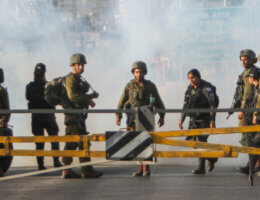
Today, as I report on developments from Palestine I recognize the striking similarities between the years of the second Intifada and now.

To me Hafez’s story is the embodiment of Israeli apartheid, and the themes I’ve covered for so many years reporting on the ground in occupied Palestine. It’s a story of violence, injustice, inequity, and a yearning for freedom in a place where oppression reigns supreme.
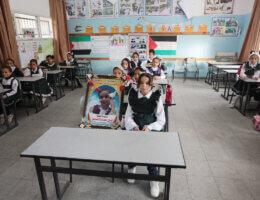
September is the month kids go back to school in Gaza. Thousands of students are…
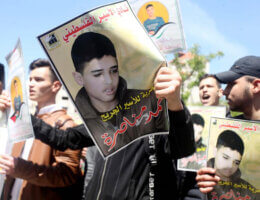
The ways in which we allow our work to impact us is also a necessary recognition that the echoes of all the stories we report on will inevitably become parts of us.
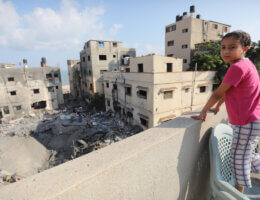
“There is not a single day that passes without reading or watching Israelis kill Palestinians,” Eman Hamed, a mother of four, tells Tareq Hajjaj in a Gaza city park. “My 77-year-old mother always says that she has lived her entire life in wars. I was born in wars as well, and my four kids were born in war, so how could I say that the war ended?”