September is the month kids go back to school in Gaza. Thousands of students are returning to their classes after witnessing a horrifying three-day Israeli attack in early August that killed 49 people. According to Mondoweiss documentation, 17 of those killed were children. The Gaza Health Ministry also reports that 151 children were also injured.
The sight of new clothes is currently filling the crowded streets as students head to school early, carrying their bags. They arrive and stand in line for morning exercises and the national anthem. Then, the teachers will read the list of the 40 students in each class.
“Absent” is not the right word to describe the situation of some students who are called by teachers but not in attendance. “Was killed” is the phrase that would be more appropriate.
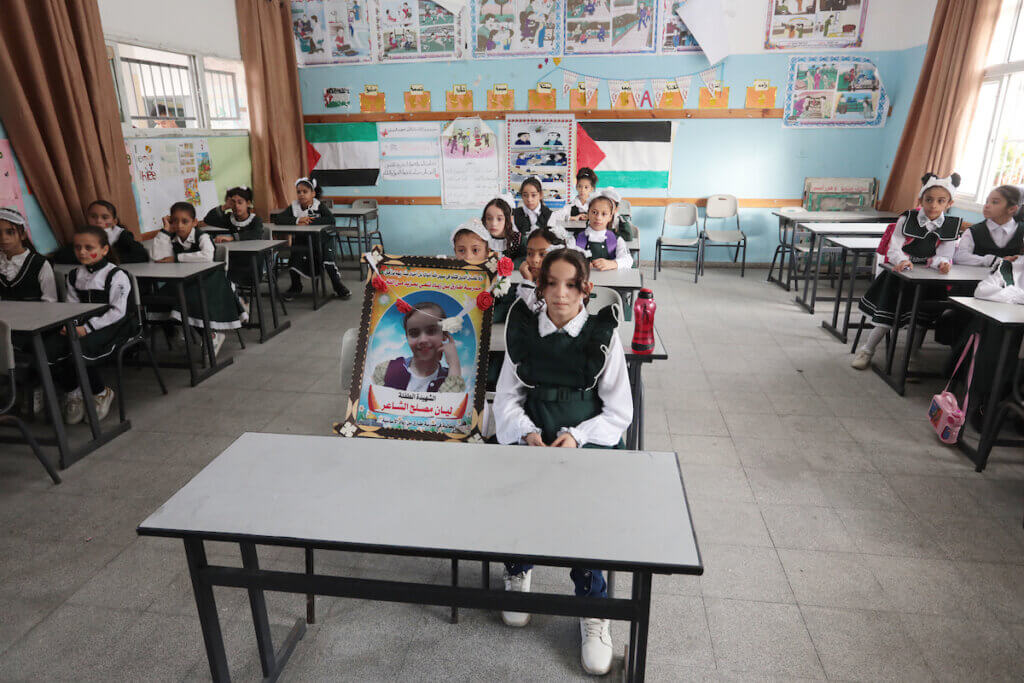
In every school, students in the same grade know each other, and form a bond until graduation. This year, many chairs in many schools were empty at the beginning of the school year. Instead of students sitting sitting in these seats it is photos of the students who were killed that occupy the chairs. This is how their peers memorialize them and keep them present in class. Although a wonderful gesture by the children, it has turned their first day of school from one of excitement to one of sadness. And for something entirely out of their control.
During the past month, I visited dozens of them while reporting my story on those who were killed in the Israeli attack. People on the streets dragged me into their houses to show me their injured children and tell me their story. Every child I met feared missing the start of the new school year due to their wounds. They also feared that they would now be considered somehow different from their peers. I heard many fears, and some were as simple as whether their injuries would prevent them being able to carry their heavy bag full of books back and forth to school.
Their wounds will lead some of them to abandon their education. Especially for those who now have physical issues that prevent them from going to school, many families do not have the financial ability to afford private teachers at home, or even a private car to drive them safely.
Their wounds, depending on their severity, also may limit their ability to participate in social activities and hobbies. Ismael Sabbah, 11, is a clear example of this. He loves football, and he spends most of his day riding his bicycle in the alleys of Jabalia refugee camp where he lives. But he was wounded in the war, and shrapnel damaged his legs.
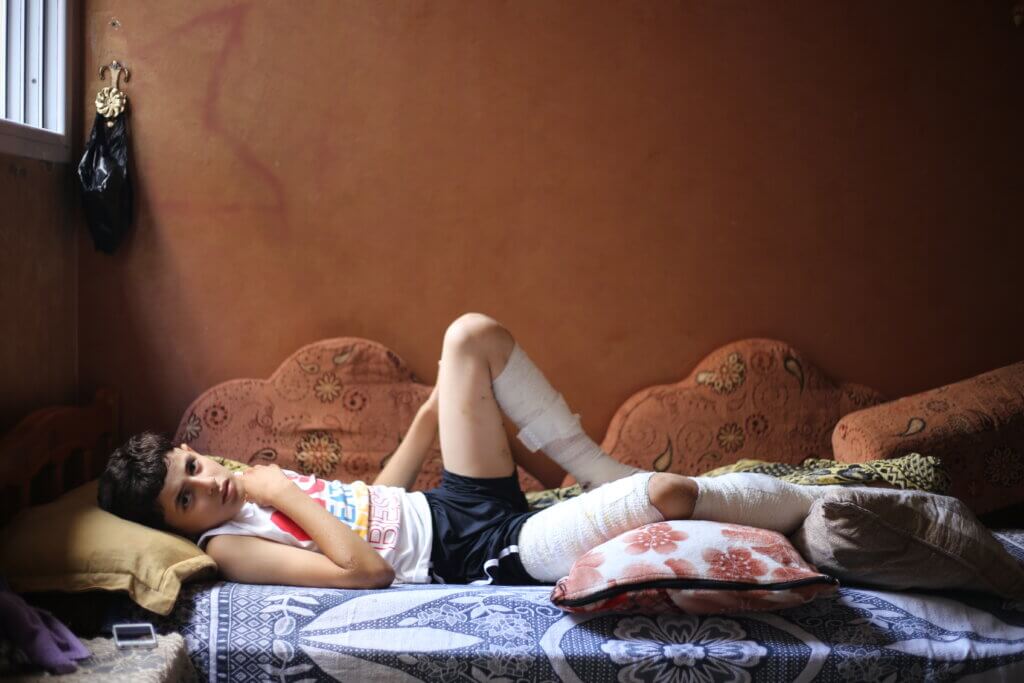
Ismael was desperately waiting to start school for many reasons, but most importantly to him was because there is a football field there where he practices his talent for scoring goals.
“I can’t stand on my feet, my family helps me stand and walk, I do not think I will be able to play again,” the boy explained.
He said that at the same time in the afternoon when he used to be riding through the camp on his bicycle he is now in his bed staring at the ceiling.
Ismael’s father, Ayman Sabbah, 43, had to hold his bleeding son and run to the hospital, praying all the way for God to save his child.
“Fathers bring toys to their children, take them on a trip for entertainment, bring them dessert and sweets, but not in Gaza. We take our kids to the hospitals, we hold them bleeding, we bring them medication, and instead of making them laugh, we wipe their tears,” the father tells me.
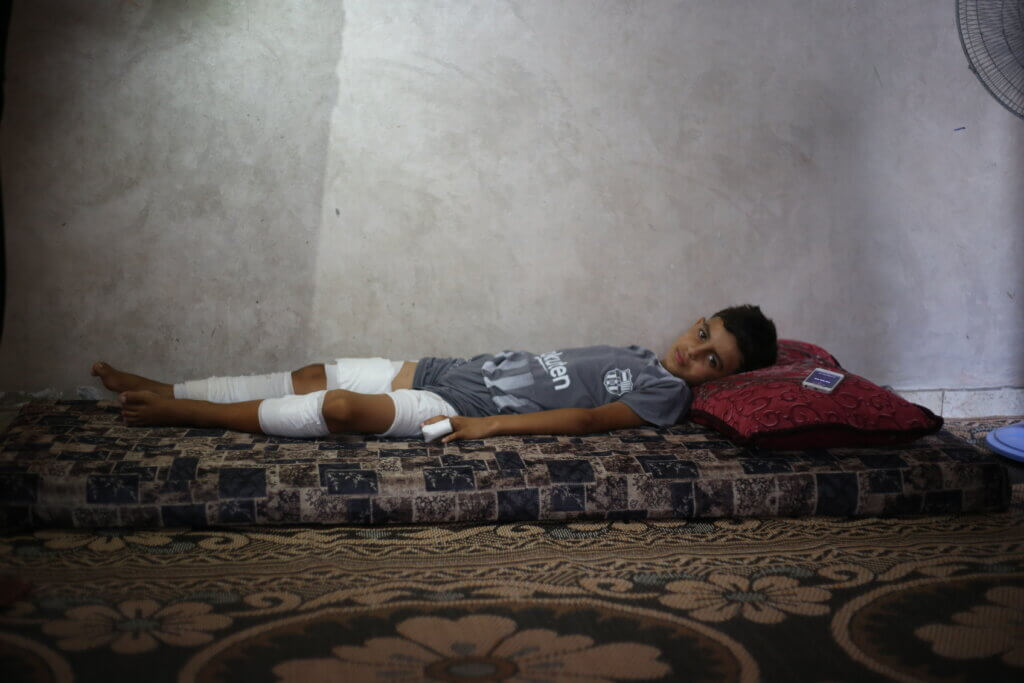
I left Ismael’s home, and outdoors I found another group of people who wanted me to visit their injured sons. Mohammed Al-Daifi, 12, has similar wounds as Ismael. Next door, I found Mohammed Al-Khatib, 10, the only son of his family. He was injured in his arm. I believe that if I went to every house I would find someone who was injured by Israel. Among all people who were injured, kids’ stories are the most devastating. They, in most cases, do not know how to express their feelings but their faces reveal it all.

Hussain Mansour is 51 years old. He is the father of Lama, 10, a girl whose intestines were severely injured by shrapnel. He said that the world should wake up and intervene to stop such crimes against children.
“It is time for the world to look deeply and seriously at Palestinian lives. We are as valuable as any human across the world, The Zionist occupation kills our kids and families. We call upon the free people around the world to help us before Zionism kills an entire nation,” he told me.