Over the years, I have found that for myself and for many other journalists in Palestine, leaving Palestine, even for short periods of time, can bring on feelings of anxiety, guilt, and shame.
As a small team, we struggle to cover the intensity and frequency with which Israel takes Palestinian life. This is partly because we are human, yet it is also because I find myself stuck in the details of every story.
I often go to cover one story and find many other stories inside it. Sometimes it feels like Gaza is the homeland of original stories. But unfortunately, many of these stories are painful.
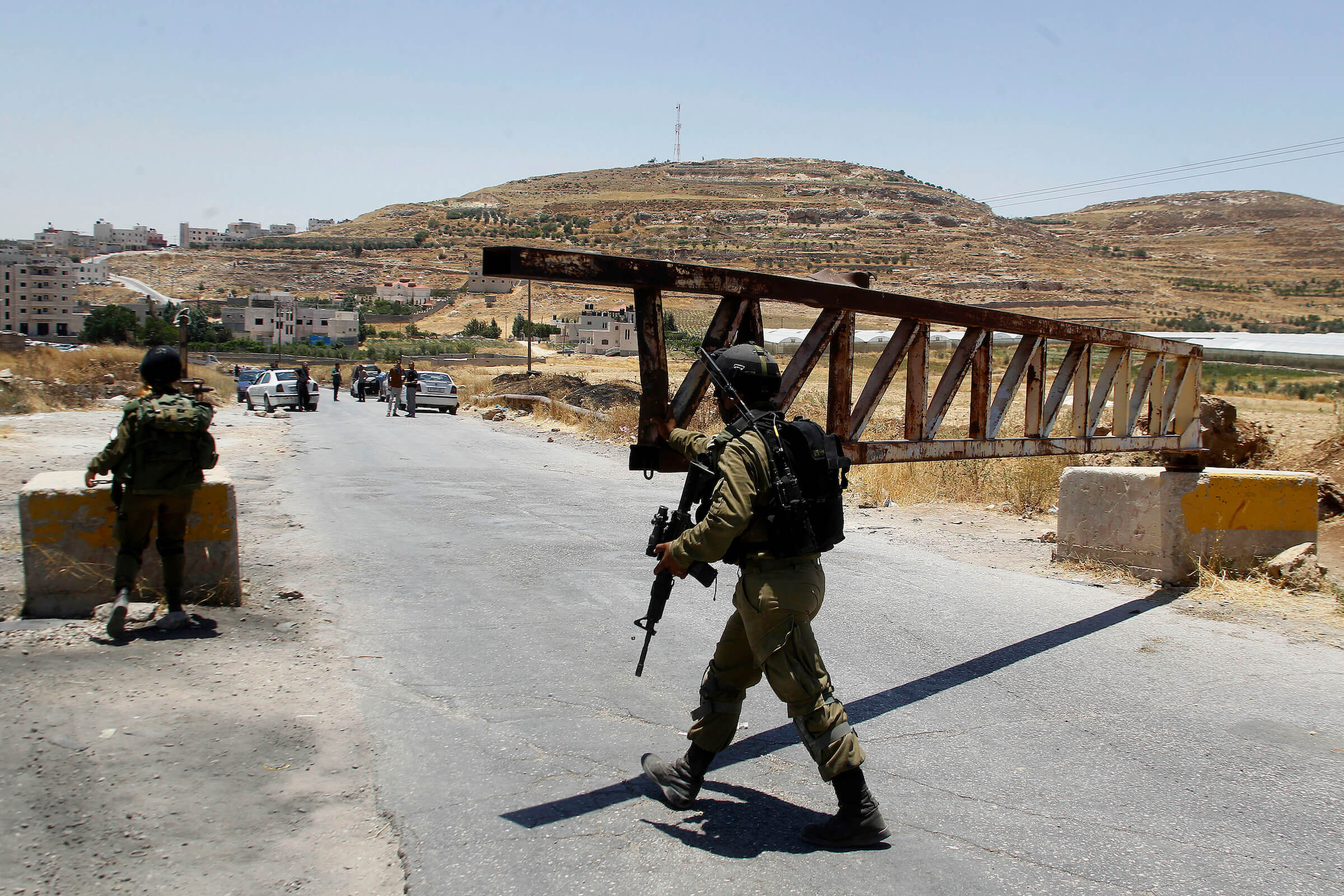
In covering developments in Palestine, as reporters on the field, we are inevitably exposed to the more intimate details of an incident, event, person. We enter the homes of killed fighters, and stand outside the courts of families waiting to see their teenage child in handcuffs. We learn the stories of entire families, sometimes we notice a similar echo across cities and towns, we cluster information into numbers and infographics. We take what can be ugly and vast, and are tasked with making it easy to consume.
We looked out at the view in front of us and could see al-Walaja on the mountain across from us, completely surrounded by Israel’s separation fence. Eventually it will be turned into a wall, and the Palestinians who grew up going to Ein Haniya, playing in the spring, singing songs, picking local herbs, and making tea on fires will only be allowed to enter it with a fee, and only during the hours set out by the Israeli Nature and Parks authority.
There is an ebb and flow between hearing the stories, being on the ground reporting on the developments of war, and being a part of this reality at the same time. No certainty of what can be found, no real safety, and a looming feeling of endlessness.
Journalists in Gaza often face an internal conflict where you feel split between the pleasure of being able to tell people’s true stories and the concern that you might be judged for it because of who you are.
It is a maddening reality to report on Israel’s heinous crimes every day, forcing real people, who had real lives, real families, and real hopes and dreams, into boxes and statistics, in an attempt to make it digestible for audiences and readers, to try and help them understand the true scale of the oppression forced on the Palestinian people.