Next week will mark 75 years since the Nakba, the “catastrophe”, that expelled 750,000 Palestinian and launched the Israeli occupation of Palestine. But the Nakba is not simply an historical event. It continues to unfold today.
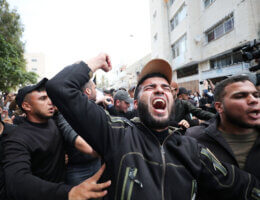

Next week will mark 75 years since the Nakba, the “catastrophe”, that expelled 750,000 Palestinian and launched the Israeli occupation of Palestine. But the Nakba is not simply an historical event. It continues to unfold today.
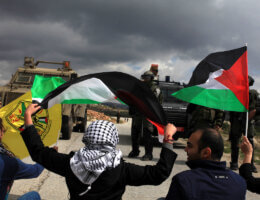
At 18, the struggle in Nabi Saleh was my initiation to Palestinian confrontation, and to hope. Now, twelve years later, I am covering a new generation of Palestinians fighting to survive the slaughterhouse.
Palestinian journalists spend years studying ethics and integrity, but once we start practicing journalism we find our right to freedom of expression being constantly violated.
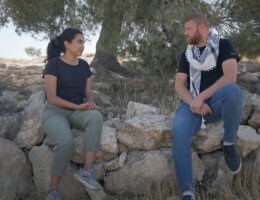
Over the years, I have found that for myself and for many other journalists in Palestine, leaving Palestine, even for short periods of time, can bring on feelings of anxiety, guilt, and shame.
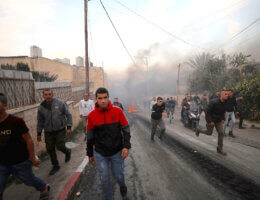
As a small team, we struggle to cover the intensity and frequency with which Israel takes Palestinian life. This is partly because we are human, yet it is also because I find myself stuck in the details of every story.
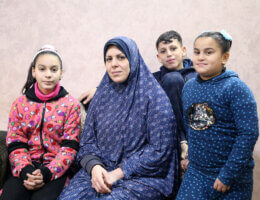
I often go to cover one story and find many other stories inside it. Sometimes it feels like Gaza is the homeland of original stories. But unfortunately, many of these stories are painful.
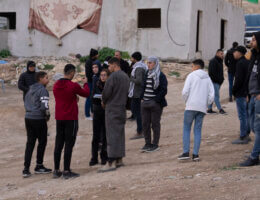
In covering developments in Palestine, as reporters on the field, we are inevitably exposed to the more intimate details of an incident, event, person. We enter the homes of killed fighters, and stand outside the courts of families waiting to see their teenage child in handcuffs. We learn the stories of entire families, sometimes we notice a similar echo across cities and towns, we cluster information into numbers and infographics. We take what can be ugly and vast, and are tasked with making it easy to consume.

The Gaza Strip is an area where everyone is connected, where people support each other…
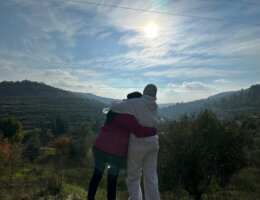
We looked out at the view in front of us and could see al-Walaja on the mountain across from us, completely surrounded by Israel’s separation fence. Eventually it will be turned into a wall, and the Palestinians who grew up going to Ein Haniya, playing in the spring, singing songs, picking local herbs, and making tea on fires will only be allowed to enter it with a fee, and only during the hours set out by the Israeli Nature and Parks authority.

There is an ebb and flow between hearing the stories, being on the ground reporting on the developments of war, and being a part of this reality at the same time. No certainty of what can be found, no real safety, and a looming feeling of endlessness.