


At its General Synod this week, the Church of England passed a motion calling church members to stand in costly solidarity with Palestinian Christians. In addition to encouraging the church to “hear” the voices of Palestinian Christians, the resolution calls for “a review of investment policies by Church of England investors.”
Sarah Mullally, the Archbishop of Canterbury, addressed the Synod, saying: “The threat to Palestinian Christians in particular — whose numbers are becoming ever smaller — is existential. Against this desperate backdrop, we are called to a new and active solidarity. We must not ignore the urgency of this moment.”
Despite intense lobbying by Jewish organizations in the UK, the motion passed with an overwhelming majority in all three houses: 25 Bishops voting in favor, none against, and 5 abstaining; 115 Clergy in favor, 20 against, and 30 abstaining; 113 Laity in favor, 27 against, and 35 abstaining.
The Church of England’s vote follows the adoption of a resolution last week by the General Synod of Presbyterian Church (U.S.A) and a resolution passed in June by the American Academy of Religion, both of which bodies named Israel’s war on Gaza a genocide. The Presbyterian Church (U.S.A) is the third major U.S. denomination to name the genocide, following designations of genocide cited in resolutions at the 2025 assemblies of the Christian Church (Disciples of Christ) and the United Church of Christ.
In addition, the Presbyterians voted unanimously last week to divest from Palantir Technologies and General Electric Aerospace, both of which produce technologies used in Israel’s war on Gaza and its ethnic cleansing in Palestine. The Academy of Religion, in its motion approved by 98% of voting members, described the war as a “scholasticide,” — an “intentional effort to comprehensively destroy the Palestinian educational system.”
Despite the continuing hesitancy of many church leaders around the world to criticize the State of Israel, these three actions signal the growing, vocal opposition on the part of grassroots members of the global church to Israel’s laws, policies, and practices that contravene international law and amount to what the U.N. and many human rights organizations have labeled genocide and ethnic cleansing.
Charlotte Marshall is Director of Sabeel-Kairos UK, a Christian charity whose members have long campaigned for the Church of England to take a public stand in support of the Palestinians. Following the synod vote, Marshall commented on the significant shift in the Church of England: “After four years of delaying this vital debate, we are delighted that the Church has committed to both hearing and taking tangible action in solidarity with the Palestinian Church, as they seek their freedom, dignity and equal rights in the Holy Land.”
The church’s debate — pro and con — centered around the motion’s furthering of four significant statements describing the realities that Palestinians are experiencing. This included the most recent document from the broadest Palestinian Christian nonviolent movement, Kairos Palestine, titled Kairos Palestine II: A Moment of Truth in a Time of Genocide (KPII). KPII was written and released in the midst of Israel’s latest war on Gaza, expanding settler violence, and increasing annexation of Palestinian-owned lands in the occupied West Bank.
KPII names Israel’s program of ethnic cleansing and genocide and calls on the global church “to isolate Israel, hold it accountable, impose sanctions, boycott it, and ban the export of arms until it complies with international law, ends oppression and tyranny, and adheres to the principles of justice and peace.” The document insists that “we must call things by their proper names: Israel is a colonial, settler, and exclusionary entity built upon the displacement of the indigenous population.”
Over the years, mounting pressure on the Church of England to refuse to make public statements in support of Palestinians has come from the Chief Rabbi Ephraim Mirvis, the Board of Deputies of British Jews, the Council for Christians and Jews, and the Israeli Embassy. Ahead of the debate, the Chief Rabbi said the Kairos II document “presents a one-sided account of a complex conflict, downplays the historical experiences and legitimate concerns of Jewish people, and offers little more than political activism dressed up as theology.”
Following passage of the motion, Mirvis said, it is “shameful that the Church of England General Synod has recommended engagement with Kairos II. … This is a document full of falsehood, which openly rejects dialogue, uses extreme rhetoric to challenge the very existence of Israel and objects to existing peace agreements in the region.”
Asked by Mondoweiss to respond to the church’s passage of the motion and comments by British Jewish leaders, Rifat Kassis, Coordinator of Kairos Palestine, said, “Criticisms of this decision by the Chief Rabbi and others must be addressed with historical and factual clarity. The claim that engaging with Kairos Palestine II promotes a ‘single, warped narrative’ ignores a century of reality: Palestinians have long lived under the dominance of a state-sponsored Zionist narrative that has marginalized or erased their history, identity, and presence in their homeland. Where there is systemic oppression, any honest search for truth must begin by listening to the testimony of those living under it.”
Kassis said, “To suggest, as the Chief Rabbi did, that KP II draws attention to what many international experts and institutions have described as an unfolding genocide somehow ‘undermines peace agreements’ distracts from the realities that continue to destroy the prospects for peace. The principal obstacles are the ongoing expansion of illegal settlements, escalating settler terrorism carried out with [state] protection, the documented torture and abuse of Palestinian prisoners, and devastating military operations that have been extensively documented by Israeli soldiers themselves and by Israeli human rights organizations, including B’Tselem, Rabbis for Human Rights and many others.”
“Further,” Kassis continued, “equating the Palestinian struggle for freedom and self-determination with antisemitism, a charge that Kairos Palestine explicitly rejects, is a misuse of historical trauma that serves to silence the legitimate moral and political demands of an occupied and oppressed people.”
While expressing the board of Kairos Palestine’s gratitude for the shift in the Church of England’s expressed support for Palestinians, Kassis described it as a modest beginning. He lamented, “It has taken the Church of England nearly 110 years of overlooking Palestinian suffering, during which it also played a role in enabling that suffering, to finally listen to the voices of its own Christian siblings in the Holy Land.”
Kassis concluded, “We welcome the Synod’s decision to ‘hear’ the voices of Palestinian Christians and its acknowledgment of, and call to repent for, the Church’s historic role in ignoring this suffering and contributing directly ‘to the situation now affecting the Palestinian people.’ Yet after more than a century of complicity, merely ‘hearing’ is not commensurate with the depth of that historical debt. We hope this long-overdue historical step marks the beginning of genuine accountability, leading to concrete action to help halt the rapid and existential decline of the indigenous Christian presence in their homeland.”
In her report on the synod vote, Sabeel-Kairos UK Director Marshall wrote, “We are delighted that…there is finally a willingness in the Church of England to hear and respond to the cry of Palestinian Christians. Although there is much more work to be done, we look forward to seeing the progress towards greater solidarity and action that will come from [our church’s] debate.”
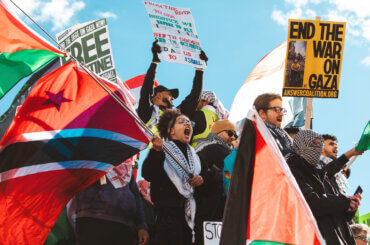
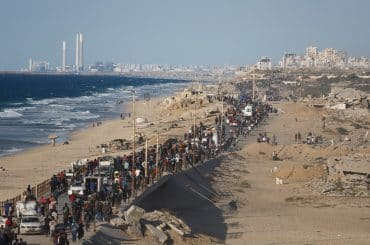
For those who still think ‘genocide’ isn’t the right word – about a month ago the Independent International Commission of Inquiry on the Occupied Palestinian Territory came out with a report on the targeting of Palestinian children by the IDF:
a-hrc-62-crp-2.pdf
The Independent International Commission of Inquiry on the Occupied Palestinian Territory, including East Jerusalem, and Israel examines violations and crimes against and affecting Palestinian children, including serious physical and psychological harm by the Israeli security forces since 7 October 2023 resulting in the death of at least 20,179 and injury of 44,143 children. The paper describes the deliberate targeting and killing of Palestinian children, including post-ceasefire since the October 2025 Gaza peace plan. The Commission also examines a sharp increase in violence perpetrated by members of Israeli settlers against Palestinian children in the West Bank, including East Jerusalem.
Also see –
U.N. Report Says Israeli Killings of Gaza Children Post-Truce Amount to Genocide – The New York Times
The report said at least 5,031 children under 5 years were killed during this period, 1,029 of them under the age of 1, and about 420 were newborns.
Israel has responded to the report in the expected way.
Hard for me to celebrate solidarity with one group of oppressed, and slated for destruction, group of people, and have no mention, or concern, apparently, for the non-Christian Palestinians, with whom they live, and die, side-by-side. But, it is a step forward on the right path, so to that extent, it is definitely a good thing. But, merely a start. The ten-thousand-miles journey may start with a single step, but, it has to get past that first step and keep going.
Gaza and its relation to English Christianity, below a short
https://youtube.com/shorts/iL9lWrrjsQ4?si=i9MslEvTpspU5lMC
and the hour long podcast from which it is exerted
What do historical records, ancient texts, archaeology, and DNA research actually tell us about Palestinians?
In this episode of The Deep Dive, Ahmed Alnaouq is joined by historian and bestselling author William Dalrymple to explore the deep history of the Palestinian people, which he argues have too often been erased from mainstream narratives and the documented history of Palestine.
Together, they discuss how history is taught in Britain, the origins of the name Palestine, the continuity of the people who have lived on the land for thousands of years, and why understanding the past is essential to understanding the present.
https://youtu.be/6n83RMzRrrI?si=19qb_dTX2PWZQWbK&t=1