The U.S. plan for Gaza envisions a Gaza for investors, not Palestinians.
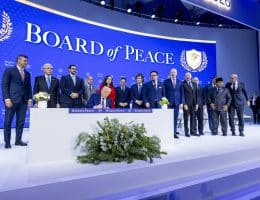

The U.S. plan for Gaza envisions a Gaza for investors, not Palestinians.

“Palestine 36” isn’t a movie about the Palestinian revolution against British colonial rule. It is about the present crossroads that Palestine is facing.

The town of Silwan has been at the heart of the Israeli settler takeover of Jerusalem’s remaining Palestinian neighborhoods. A recent Israeli court decision approved the forced expulsion of 40 families – the final blow in a decades-long legal battle.

The U.S.-sanctioned “Board of Peace” is imposing a colonial mandate in Gaza. It is the latest example of the “shock doctrine,” with the U.S. and Israel attempting to transform Palestinian society in Gaza after destroying it through genocide.

In 2025, Israeli settlers, backed by the army, displaced rural Palestinian communities in the West Bank at unprecedented rates. It is part of Israel’s escalating strategy to take control of as much of the territory as possible.

For Palestinians in Gaza, Phase 2 of the ceasefire offers little hope that it will fundamentally change the status quo Israel has established over the past three months, which many refer to as “a new form of genocide.”

Aid organizations say Israel’s recent ban of 37 groups has dealt a severe blow to humanitarian work across Palestine. In Gaza, it means “cutting off a lifeline for over two million people,” says Rahma Worldwide’s Dr. Shadi Zazzah.

Palestinians are in a political crisis. With Palestinian society divided, and no unified national leadership to represent it, regional and global powers are drawing up plans for the future of Gaza and Palestine – without any say from Palestinians.
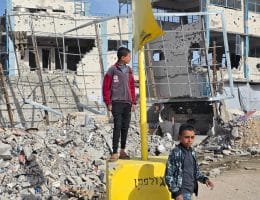
Israeli Army Chief of Staff Eyal Zamir’s statement that the “Yellow Line” dividing Gaza will be Israel’s new border shows that Israel’s plan in Gaza follows its history of redrawing its borders through ethnic cleansing and land grabs.
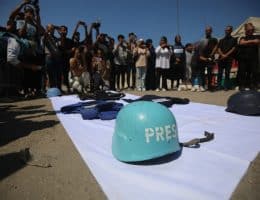
The kind of journalism we need isn’t the kind you’re going to find in legacy media or the “paper of record.” The journalism we need holds power to account.