The Supreme Court’s decision to force Palestinian politician Sami Abu Shehadeh out of the upcoming Israeli elections is the latest sign that there is no place for Palestinian citizens of Israel in the ‘Jewish and democratic’ state.


The Supreme Court’s decision to force Palestinian politician Sami Abu Shehadeh out of the upcoming Israeli elections is the latest sign that there is no place for Palestinian citizens of Israel in the ‘Jewish and democratic’ state.

Israel is trying to hide its crimes by banning international reporters from entering Gaza. We must reject this apartheid system of access.

Can a temporary consensus government advance Palestinian self-determination in the homeland and the diaspora?

Ahead of the one-year anniversary of the so-called ceasefire in Gaza, we look at a brief timeline of a long-established Israeli practice of sabotaging negotiations and violating ceasefire agreements to advance their goals.

The struggle for Palestinian liberation is a threat to the global world order. That’s why no one is “stopping” Israel.

From my uncle’s exasperated sighs over olive groves we can no longer reach, to the iron gates the Israeli army has erected at the edge of my village, there is one word we use to cope: ‘aadi’, or, “normal” in Arabic. But this reality is anything but.

In Gaza, an entire generation of children born into the genocide has no memory of how life was like before, and doesn’t know about the world outside Gaza’s walls.
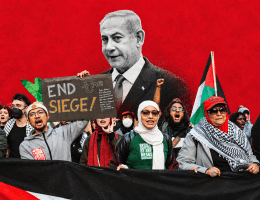
Since October 7 and the Gaza genocide, U.S. opinions on Israel and Palestine have drastically shifted. The power of Zionist propaganda has been permanently weakened, and the U.S.-Israel relationship is in a more precarious position than ever before.

Palestinians with Israeli citizenship are no longer asked to pledge allegiance, but to renounce their own history. Palestinian Knesset candidate Sami Abu Shehadeh did exactly that before Israel’s Supreme Court, and was pushed out anyway.

The contours of the battle over the future of the Democrats’ policy toward Israel are starting to take shape, and J Street is trying to cement support for the existence of a Jewish ethno-state as the Party’s bottom line.