Thomas Suarez’s Palestine Hijacked shows us that Zionist terror existed before the establishment of Israel and that it continues to today.

Thomas Suarez’s Palestine Hijacked shows us that Zionist terror existed before the establishment of Israel and that it continues to today.
Nadim Bawalsa’s new book helps us rethink the right of return to encompass Palestinians who were prevented from returning to their homes by the British Mandate’s policies, well before the Nakba. In doing so, the book adds a new layer to our understanding of Palestinian dispossession, which began long before 1948.
Ramsey Hanhan’s fictionalized memoir is a haunting lament to a childhood long gone, and a homeland that no longer exists.

Ran Greenstein argues that Palestinians will not be able to challenge Israel as an oppressive ethnonational state in the same manner that South Africans did.
The Rev. Don Wagner’s memoir of five decades as an activist leader celebrates how liberation theology led him to a deep connection with the Palestinian spirit of resistance.

Shaul Magid’s biography of Meir Kahane is timely because Kahane is an icon for the messianic Jewish leaders who are pushing the country further right. The book is Magid’s “attempt to understand his worldview.” But Kahane’s worldview is easy to understand: Jews must forever rule the Promised Land. And that extremist religious Zionism now sets the agenda for the country.

In her book “Sambac Beneath Unlikely Skies,” Heba Hayek shares the poignant logic of exile through fragmented stories of a girlhood.

Yara Hawari’s “The Stone House” is a story of unending Palestinian trauma rooted in the Nakba. However, it is also an expose of steadfastness, resistance, and I dare say – hope.
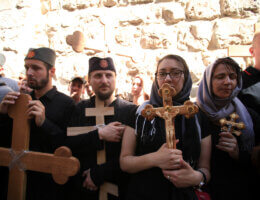
Mitri Raheb exposes the West’s invention of “the persecution of Christians” as a justification for hegemonic intervention and colonization.
Nadya Hajj powerfully conveys how new technologies make, re-make, and occasionally unmake ties in the global Palestinian community.