Hossam Shabat and Mohammad Mansour were the latest Palestinian journalists to be assassinated in Gaza. Responsibility for their killings rests in part on their Western colleagues who have failed to accurately cover Israel’s genocidal assault.
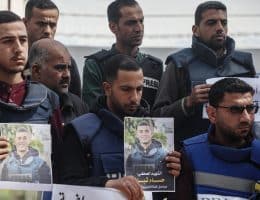

Hossam Shabat and Mohammad Mansour were the latest Palestinian journalists to be assassinated in Gaza. Responsibility for their killings rests in part on their Western colleagues who have failed to accurately cover Israel’s genocidal assault.

The IMF and World Bank are conditioning reconstruction funds on Lebanon’s normalization with Israel and disarming Hezbollah. In the Dahiya suburb of Beirut, the people who’ve lost their homes in the war think this is unacceptable.

Before the war resumed, I was able to visit my old neighborhood in Gaza City. Nothing of it was left.

Israel resumed its genocidal war on Gaza by cutting off water and electricity to 2.1 million Palestinians, threatening a humanitarian disaster.

Israel’s ethnic cleansing campaign in the West Bank is being accepted by the international community because it has already allowed genocide in Gaza and the forced displacement of Palestinians since 1948. But there is hope a new world is being born.

Progressive International’s Varsha Gandikota-Nellutla talks to Mondoweiss about the creation of the Hague Group, a campaign of global south nations to uphold the ICJ and ICC rulings on Palestine, and international efforts to hold Israel accountable.
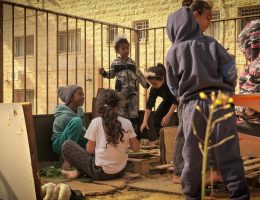
Political conflict was never the choice of Palestinians. It was and still is the ocean that separates them from their houses, their trees, and the graves of their elders, from Gaza all the way to Jenin.

Trump’s motivations are often unclear, but the recent U.S. bombing campaign on Yemen was clearly meant to stop Ansar Allah’s attacks on Red Sea shipping — and to send a message to Iran.

Israel officials say that the Trump administration gave them the “green light” to break the ceasefire and resume attacks on Gaza. And recent U.S. war crimes haven’t been limited to Palestine.

As Israel’s genocidal war resumes in Gaza, entire families are being exterminated amid the bombardment, with family homes becoming family graves. Survivors tell Mondoweiss most of the dead are women and children.