Sometimes I wonder if journalism is as pointless as politics. But when I speak to families in Gaza, I am reminded that in the face of global indifference, there is a duty, even if just to my own conscience, to try and change this horrible reality.
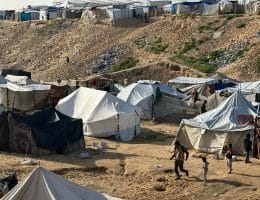

Sometimes I wonder if journalism is as pointless as politics. But when I speak to families in Gaza, I am reminded that in the face of global indifference, there is a duty, even if just to my own conscience, to try and change this horrible reality.

Yemen’s Red Sea blockade in defense of Palestinians is squarely supported by international law. But the country is being ruthlessly bombed by the U.S. to ensure Israeli impunity for its continued siege and genocide in Gaza.

Driving through Gaza for the first time since the war started, nothing was recognizable anymore. But Gaza was still there, making me realize that it was stronger than the war. It will still be there once the darkness passes.
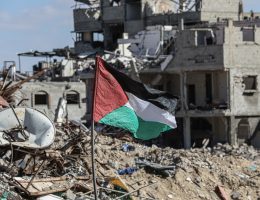
The voices of Palestinians who protested against Hamas in Gaza are not only a reminder of the unbearable suffering that has been inflicted upon them, but also of the fact that those subjected to that suffering are an entire people, and not Hamas.
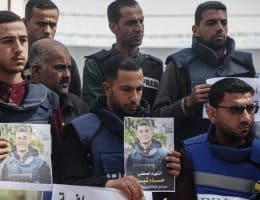
Israel escalates attacks on Gaza and the West Bank as Trump intensifies crackdown on Palestine activism and free speech.

Anti-Hamas protests this week in Gaza reflect widespread Palestinian desperation amid the Israeli genocide. The figures behind the protests might also indicate that external actors are now seeking to exploit Gaza’s pain for political gain.

It appeared that Arab states would present a united front to avoid widespread ethnic cleansing in Gaza, but the United Arab Emirates is undercutting those efforts with the Trump administration in order to cement its future influence in Palestine.

The protests in Gaza calling for Hamas to step down are fueled by a desire for certainty — that if Hamas simply surrenders, Israel’s genocide will stop. The tragedy is that these cries will go unheard, or even worse, will further fuel the war machine.

Israel announced that it would set up a bureau for the “voluntary emigration” of Palestinians out of Gaza. This isn’t the first time Israel has done it, and it won’t work this time either.

Universities are serving as staging grounds for the Trump regime’s attacks on immigrants, people of color, trans and queer people, and critics of Zionism. Universities and campus communities must refuse to cooperate with this fascist agenda.