

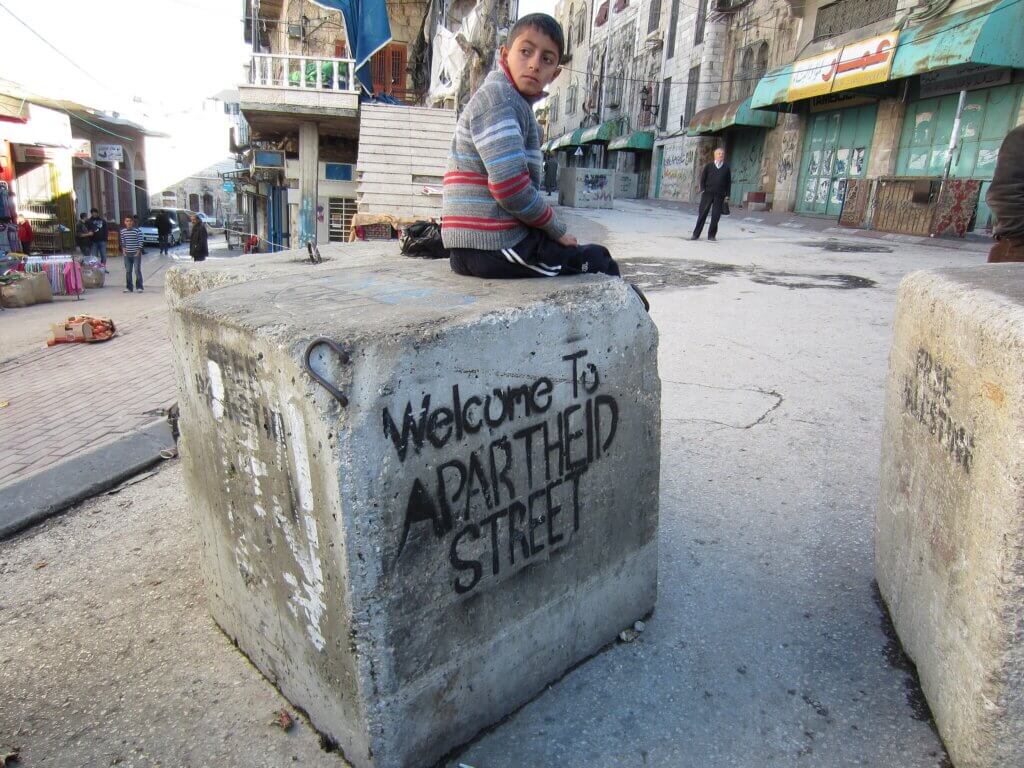
Earlier this month, just hours after Israeli Finance Minister Bezalel Smotrich stripped the planning and construction authority from Hebron’s Palestinian municipality, the implications of the move became clear on the ground when Israeli authorities approved the construction of a new Jewish religious school near the Beit Romano settlement in the heart of the Old City. It is the first project in that part of the city authorized without the Palestinian municipality’s knowledge or consent.
For Palestinians, the decision was not simply an administrative matter involving a building permit or a new educational institution. It signaled a deeper shift in the nature of Israeli control over the city, and another step toward rewriting the political and legal reality that has governed Hebron since the 1997 Hebron Protocol.
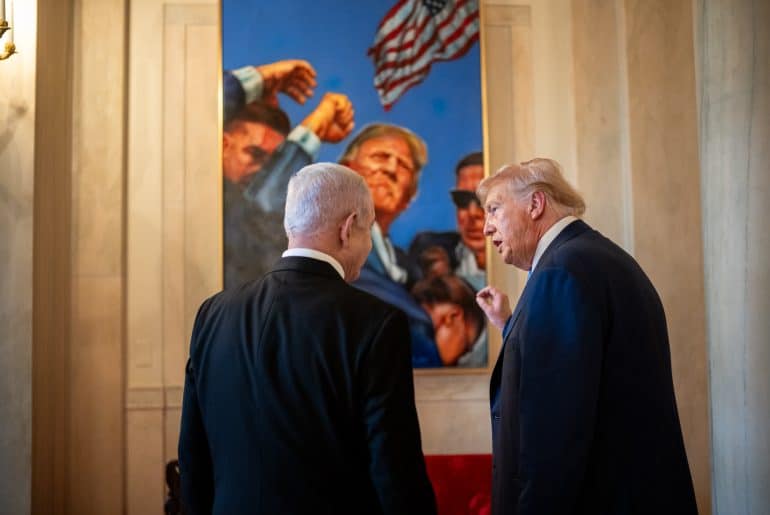
The Hebron Protocol, signed on January 15, 1997 by then-Prime Minister Benjamin Netanyahu and PLO Chairman Yasser Arafat under American mediation, divided the city into two zones: H1, covering roughly 80% of Hebron, transferred to Palestinian Authority control; and H2 – the Old City, the Ibrahimi Mosque, and five Jewish settlement clusters – was left under full Israeli military control, extending the occupation’s reach over some 20,000 Palestinians at that time under the pretext of securing a settler population numbering in the hundreds.
The resulting reality on the ground has been one of a highly militarized and divided city, where Palestinians living in H2 face intense restrictions on movement, a harsh network of Israeli checkpoints, and near-daily attacks from Israeli soldiers and settlers.
Despite the deeply entrenched apartheid in the city of Hebron, as per the Hebron Protocol, Hebron’s Palestinian municipality retained civil and planning jurisdiction over the whole city. In practice, that meant the municipality held the authority to issue or deny building permits, designate land use, approve infrastructure projects, connect homes to water and electricity networks, and maintain roads and public spaces. It was the mechanism through which Palestinians could, however partially, shape the physical development of their own city: determining where a school could be built, whether a neighborhood could expand, which streets received services.
Now, it is that framework that Smotrich’s decree has moved to dismantle.
Israel now the ultimate decision maker
The approved project of the religious school covers roughly 1,000 square meters and will house the Shavei Hevron Jewish religious school. The approval came during the same session in which Israeli authorities greenlit 576 new settlement units across various parts of the West Bank, reinforcing the reality that what is happening in Hebron is not an isolated incident, but part of a broader policy aimed at consolidating the settlement presence and entrenching Israeli control over Palestinian land.
Hebron Mayor Youssef al-Jabari described the decision to Mondoweiss as a “direct violation of the Hebron Protocol and the understandings that have governed the city since 1997.”
He insisted that “the municipality cannot be circumvented or have its role canceled, and that the stripping of its authority constitutes an overturning of agreements signed under American sponsorship,” calling on the United States, as one of the agreement’s guarantors, to intervene and prevent the alteration of the city’s existing legal and administrative reality.
Al-Jabari noted that “Israel had been making gradual attempts for years to reduce the municipality’s role and strip its authority, particularly around the Ibrahimi Mosque and the Old City, and that the latest decision grants Israeli institutions direct authority over planning and construction inside Palestinian neighborhoods.”
Israeli-affairs analyst Ismat Mansour frames the stakes in structural terms. The core of the issue, he argues, is not the religious school itself but who has become the decision-maker. Israel is not only seeking to expand settlements, he says, but to transfer the center of decision-making entirely to Israeli institutions – a shift that changes the fundamental nature of the relationship in the city.
“Control over urban planning is not a technical or administrative matter,” Mansour said. “It is one of the most important tools of control over land. When Israel becomes the sole body empowered to approve or reject construction projects, it effectively controls the city’s future and the direction of its growth, which makes talk of a temporary occupation administration less realistic than ever”.
He adds that the choice of Hebron specifically is not incidental. The city represents one of the most sensitive cases in Israel’s occupation of Palestine, and any change to its legal status carries political implications that extend far beyond its geographic boundaries to the future of the West Bank as a whole.
Political writer and analyst Hani al-Masri sees the decision as reflecting a broader shift in Israel’s approach to previously signed agreements. The current Israeli government, he argues, no longer treats the Oslo agreements or the Hebron Protocol as binding frameworks but as arrangements that can be modified or bypassed whenever they conflict with its political and settlement objectives.
“The decision is not about building a school or issuing a permit,” al-Masri said. “It is about redefining actual authority on the ground. When Palestinian institutions lose their basic powers, existing agreements become political texts with no practical effect on reality”.
Planning as annexation
Settlement and cartography expert Khalil Tafakji connects the new decision to the transformations underway across the West Bank. Control over urban planning, he argues, is no less important than military control, the body that determines where building is permitted and where it is prohibited is the one that actually shapes a region’s future.
Tafakji notes that settlement expansion no longer means only the construction of new residential units. It now encompasses control over the tools of administration, organization, and planning – tools that give Israel greater capacity to impose permanent facts on the ground that will be difficult to reverse.
“Religious and educational projects”, he argues, “have historically been among the most effective instruments for expanding the settlement presence: these institutions do not only serve an educational function but become, over time, population anchors drawing students, families, and religious communities into permanent residence around them, generating new security and service needs that justify further control over the land”.
An attack on the city’s Palestinian identity
Amjad Karaja, director of the Hebron Waqf, is direct about what the yeshiva approval represents.
“What is happening in Hebron today cannot be viewed as merely a construction project for a Jewish religious school,” he told Mondoweiss. “It is part of an integrated settlement project targeting a reshaping of the religious, historical, and geographic reality of the old city and the Ibrahimi Mosque. The occupation is not content with expanding outposts or seizing Palestinian properties – it is seeking to establish permanent religious and educational institutions that give the settlement presence a long-term institutional character”
Karaja said the project’s location and timing carry clear significance. “We are facing an attempt to entrench the settlement presence through religious and educational tools designed to attract more settlers into the heart of Hebron”.
He outlined a broader pattern: the old city and the Ibrahimi Mosque have been subjected for years to continuous Judaization policies – control over public facilities and services, restrictions on Palestinian movement, and the economic and social weakening of the Palestinian presence. The new religious school, he said, is another link in that chain.
“The occupation knows that educational and religious institutions are not merely buildings, they are tools for consolidating political and settlement presence. Building a Jewish religious school in this location carries dimensions that go beyond the educational, aiming to reinforce the Israeli narrative in the space and to connect surrounding settlements and outposts into a single integrated system”.
Karaja described the move as an assault on the historical character of the old city, one that contradicts international law and UN resolutions treating settlement construction in occupied Palestinian territory as illegal. Hebron, he said, with its religious and historical significance, has become a primary target for settlement projects seeking to alter its Arab and Islamic identity.
“What is happening in Hebron is not a local issue for the city’s residents alone,” he concluded. “It is a direct targeting of Palestinian religious and civilizational heritage. What is needed today is a genuine international position that stops these measures, because their continuation will generate further tension and undermine any chance of preserving the historical and legal status of the old city and the Ibrahimi Mosque”.
Jerusalem and settlement researcher Ziad Abheis sees what is happening in Hebron as closely resembling the model Israel applied in East Jerusalem over previous decades. Israeli authorities have long used the religious dimension to lend legitimacy to settlement projects, presenting them as a restoration of historical or religious ties while in practice expanding Israeli control and reducing the Palestinian presence.
“The new religious school cannot be separated from efforts to entrench the biblical narrative at the heart of Hebron,” Abheis said, “and to transform the settlement presence from limited outposts into a permanent part of the city’s urban and demographic landscape”.
Who will draw Hebron’s future?
As the legal and political battles over Hebron’s municipal authority and the future of the city’s protocol continue, the larger question remains open: do these steps represent the beginning of a new phase in which Israel seeks to reshape Hebron politically, demographically, and legally?
Nearly three decades after the Hebron Agreement was signed, the issue appears to be no longer about a new religious school or a limited construction project – but about who holds decision-making power in the city, and who draws its future.
For many Palestinians, the stripping of the municipality’s authority and the immediate approval of new settlement projects are not two separate events. They are part of an integrated trajectory aimed at remaking Hebron and imposing a new reality that may render the 1997 agreement more a relic of the past than a framework governing the present.
Aseel Mafarjeh
Aseel Mafarjeh is a journalist based in the West Bank.

Issa Amro comments:
New “Blue Roads” have appeared in Hebron, near my home, marked as open exclusively to Israelis. Restricting access to roads based on national identity is segregation, not security. Hebron continues to serve as a laboratory of separation, and unequal rights.
Issa Amro عيسى عمرو 🇵🇸 on X: “New “Blue Roads” have appeared in Hebron, near my home, marked as open exclusively to Israelis. Restricting access to roads based on national identity is segregation, not security. Hebron continues to serve as a laboratory of separation, and unequal rights. #Hebron #Palestine https://t.co/QWqn6tPJmV” / X
“Israel bans call to prayer at Hebron’s Ibrahimi Mosque for fifth day”
Israel bans call to prayer at Hebron’s Ibrahimi Mosque for fifth day | Middle East Eye
I don’t care who lived there in 800 B.C., this is apartheid.
This is but another one of many ethnic cleansing steps by the extremist who now government Israel and its illegally occupied territories in the West Bank, East Jerusalem, Gaza, the Golan Heights, and now Lebanon
Where is the outrage from the toothless leaders in the “civilized” world?
This is one of those articles where a person has to take a breather before putting finger to keyboard. I’ve been involved in planning housing and resources for the village I live in, about fifty miles north of London. The national government wants X number of new houses; the county government has agreed to permit Y number of them as its share; the civil parish thinks it might have to agree to Z of them on its land. This could put pressure on our local schools, medical services and road network. There is vanishingly little party-political squabbling – we all live together in this little bit of the country, so our interests tend to be aligned. A bunch of religious folk might come along and propose to open a school of their own. No great problem, provided they can find suitable land to purchase and build on, and meet the many statutory requirements for having children in their care. No, we will not allow you to build a road only you can use to access your land, nor will we require our village stores and café to give you special terms. This is because we have RIGHTS.
Up against crazies filled with hate and violence:
https://www.youtube.com/watch?v=R611drTEHPA
https://www.youtube.com/shorts/bi6zo_3l3FQ
https://www.youtube.com/watch?v=19-hmgaM1ZQ
https://www.google.com/search?q=violent+illegal+settlers+in+west+bank+you+tube&rlz=1CALBTX_enUS1220&oq=violent+illegal+settlers+in+west+bank+you+tube&gs_lcrp=EgZjaHJvbWUyBggAEEUYOdIBCTIxODgxajBqN6gCALACAA&sourceid=chrome&ie=UTF-8#fpstate=ive&vld=cid:141c08f7,vid:7KbQqGr9laM,st:0
https://www.theguardian.com/world/2026/jun/29/is-it-israels-aim-to-kill-our-children-west-bank-parents-implore-end-to-idfs-child-killings-with-impunity