Trump’s motivations are often unclear, but the recent U.S. bombing campaign on Yemen was clearly meant to stop Ansar Allah’s attacks on Red Sea shipping — and to send a message to Iran.
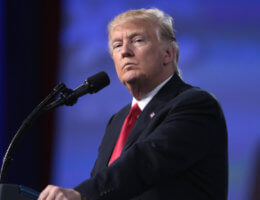

Trump’s motivations are often unclear, but the recent U.S. bombing campaign on Yemen was clearly meant to stop Ansar Allah’s attacks on Red Sea shipping — and to send a message to Iran.

Secretary of State Marco Rubio’s first trip to the Middle East made clear that Donald Trump is driving U.S. policy and largely adopting Israel’s belligerent stance in Gaza and Iran. The question remains whether the rest of the region can stop them.

On Tuesday Israeli Prime Minister Benjamin Netanyahu became the first foreign leader to meet Donald Trump in The White House during his second term. During the meeting, Trump doubled down on previous suggestions to remove Palestinians from Gaza.

The October 7 Hamas attack unraveled truths across the region, reopening questions of the future that lay dormant for years. Now, with the fall of Assad, the power map is being redrawn, presenting new threats and possibilities.
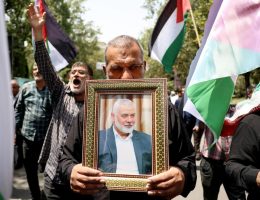
On the martyrdom of Ismail Haniyeh as Iran inaugurated a new president, and the ways the Martyr may enable us to see a path forward to break a siege that stretches from Tehran to Gaza.

Even though Israel’s much-anticipated strike on Iran was smaller than expected, the threat of a potential global war may actually be growing.
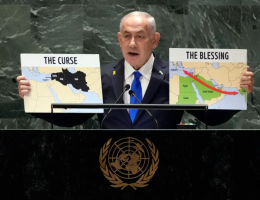
Israel has been able to insulate itself from the effects of the economic blockade imposed by the “Axis of Resistance” through supply chain warfare in the Middle East and the broader region.
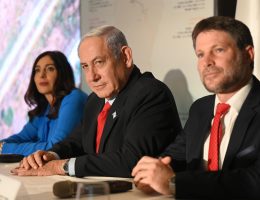
On October 18, two U.S. intelligence documents on a potential Israeli attack on Iran were leaked, one describing shifting missile deployments, and the other detailing possible Israeli rehearsals for a strike on Iran.

Donald Trump claims that Gaza could be “better than Monaco,” but Palestinians “never took advantage” of its location, while Kamala Harris declares Iran is the United States’ greatest adversary.
Assal Rad joins The Mondoweiss Podcast to discuss media coverage of recent events in Palestine and Lebanon and the persistent pro-Israel bias in Western media.